
Getrag MPS (TCM) — Remapping and Powershift Optimization
Remapping of the Getrag MPS TCM (MPS6): shift maps, torque, pressure. OBD/bench/boot access. Workshop or remote file. Request your personalized quote.
Please note: at Incarline, “repairing” a control unit means cloning. We transfer your original data — coding, immobiliser pairing and adaptations — onto a healthy unit with an identical reference. We do not carry out component-level repairs on your original unit.
The Getrag MPS transmission ECU (TCM category) controls a widely used 6-speed wet dual-clutch gearbox known as MPS6 among several manufacturers. For optimization purposes (stage 1/2 engine, removal of engine-side equipment like DPF/EGR/AdBlue), remapping the Getrag MPS allows adjusting shift laws, torque limits accepted by the gearbox, and clutch pressure ramps to harmonize behavior with the engine map. Software access is performed depending on the versions via OBD (CAN), in bench via the TCM connector, or in boot-mode directly on the electronic board. Professional tool suites on the market (e.g., KESS/KESSv3, CMD, PCMFlash, MPPS) offer adapted protocols depending on hardware/software revision. Incarline can perform the remapping of the Getrag MPS in the workshop or provide a modified file remotely, with prior data backup and respect for the mechanical limits of the transmission.
Find your exact reference
Search by hardware reference, software reference or control unit name. Click a result to configure and order without leaving the page.
Technical Sheet of This Family
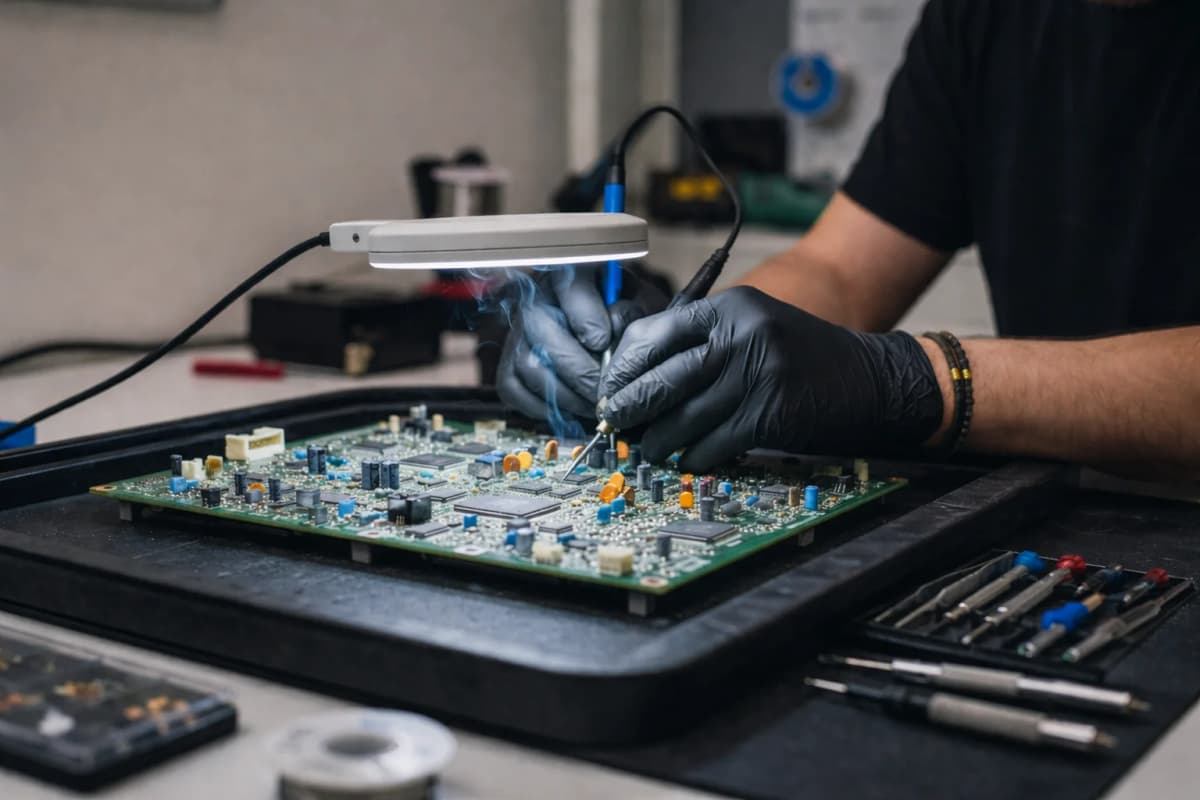
The Getrag MPS (often referred to as MPS6 in parts catalogs, also known by brands under a 6-speed 6DCT designation) is a TCM dedicated to a wet dual-clutch transmission with electrohydraulic control. The module combines control electronics and integrated hydraulics (mechatronic) to control the clutches, oil pressure, selector forks, and gear synchronization. The architecture generally relies on a 32-bit automotive generation microcontroller and separate memories for firmware (flash) and pairing/adaptation data (EEPROM or data area). Identifiers such as the VIN, software indexes, and clutch learning values are stored in a way that allows restoration after intervention.
Access and Protocols: the Getrag MPS is accessible for reading/writing via OBD (CAN) on certain versions when the manufacturer protocol allows it; however, in practice, bench access (power and CAN directly on the removed ECU) and boot-mode on service pads of the board are preferred to secure the operation. Depending on the revisions, low-level access such as boot/BDM/JTAG may be necessary. Well-known professional suites (Alientech KESS/KESSv3, CMD, PCMflash, MPPS) offer drivers according to the hardware/software pair; it is advisable to validate the exact support before any writing. The family was mainly distributed in the 2010s, with hardware and software developments leading to internal revisions (including variants referenced as MPS6 and MPS6_GEN3).
Modifiable Maps and Calibrations: on the Getrag MPS, interventions typically focus on the torque tables accepted by the transmission (torque interface with the engine ECU), shift laws (gear change points based on load/speed/temperature), pressure ramps, and clutch fill times (kiss point/fill time), thermal limits, and, if necessary, safety parameters associated with controlled slip. Managing the wet clutch involves maintaining sufficient pressure and temperature margins. Technical limits are related to the thermal capacity of the oil, disc wear, and the robustness of the mechatronic block; overly aggressive calibration will result in jerks, over-revving between gears, or overheating.
Vehicles Concerned
The Getrag MPS TCM equips vehicles using the MPS6 wet dual-clutch transmission from certain manufacturers. It is notably found on mid-sized diesel and petrol engines, mostly in front-wheel drive. The examples below are indicative and may vary depending on markets, engines, and years.
- Ford Mondeo 2.0 TDCi — Powershift MPS6 (2010s)
- Ford S-MAX 2.0 TDCi — Powershift MPS6 (2010s)
- Ford Galaxy 2.0 TDCi — Powershift MPS6 (2010s)
- Ford Kuga 2.0 TDCi — Powershift MPS6 (2010s)
- Volvo S60 2.0D — Powershift (early 2010s)
- Volvo V60 2.0D — Powershift (early 2010s)
Before any intervention, confirming the gearbox type (wet MPS6, not another DCT) via the TCM label or the manufacturer's parts catalog is imperative.
Points of Vigilance
Risks and Precautions: writing a Getrag MPS carries a risk of bricking if the power supply drops, if checksums/CRC are not correctly recalculated, or if an unsuitable protocol is used. It is recommended to perform a complete dump (flash + data), save identifiers and clutch adaptation values, and use stable voltage maintenance. After remapping, a clutch reset/learning and a warm-up procedure are often necessary to regain smooth operation. The torque limits accepted by the TCM must remain consistent with the mechanical potential of the MPS6 to avoid slipping, hydraulic overpressure, and triggering of safety features.
Tools and Methods: depending on the Getrag MPS revisions, OBD may suffice for a simple calibration update; however, bench/boot access is frequently preferred for a safety margin and access to deep areas. Widely used professional suites (e.g., Alientech KESSv3/KESS, CMD, PCMflash, MPPS) cover, depending on versions, OBD, bench, and boot-mode; always verify the software ID and exact protocol before writing. Strategy-wise, optimization involves cautiously lifting certain torque limiters, revising shift laws to avoid under-revving with a “staged” engine, and adjusting pressure ramps to limit heating. In case of replacement or used Getrag MPS, data cloning or VIN/adaptation pairing may be required to avoid incompatibilities. Depending on the diagnosis, Incarline can clone the data from your Getrag MPS onto a healthy unit with a strictly identical reference, or supply an already-paired used unit: we do not carry out component-level repairs.
Frequently asked questions
How do I know if my Getrag MPS TCM accepts remapping via OBD?
Which maps can be modified in a Getrag MPS for a stage 1/2?
Can a Getrag MPS be cloned in case of TCM replacement?
Is the Getrag MPS TCM affected by DPF/EGR/AdBlue removal?
What are the risks of bricking a Getrag MPS during writing?
What is the difference between Getrag MPS TCM remapping and a paired used Getrag MPS?
Which vehicles are most often equipped with a Getrag MPS (MPS6)?
Can the original configuration be restored after Getrag MPS remapping?
Your reference isn’t listed?
Contact us — we can source your control unit or handle your repair on a quote basis.
Contact us