
Tested used Siemens/Continental GPEC2 ECM
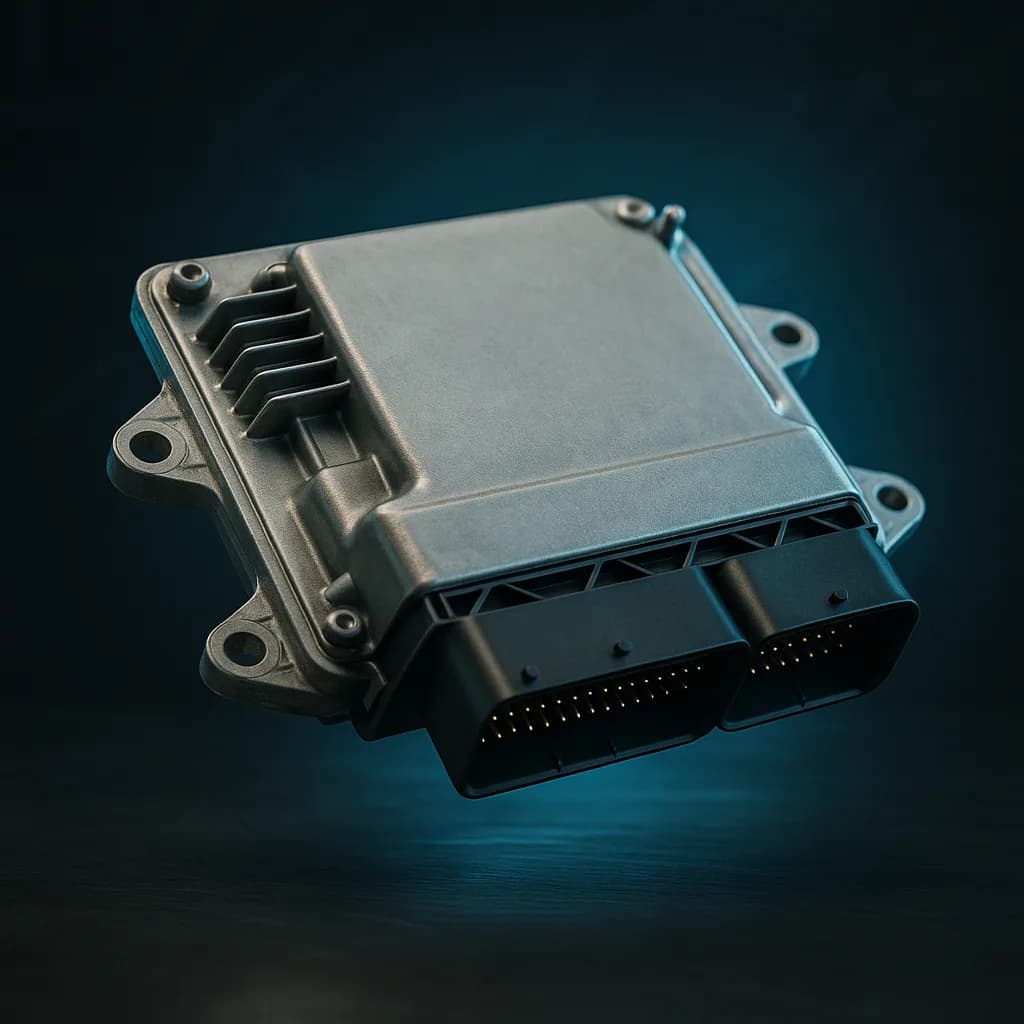
You are viewing a tested used part: a Siemens/Continental GPEC2 engine control module (ECM). Before purchasing, strictly verify the OEM reference on the label of your original unit and the exact mention of the family (GPEC2, sometimes referred to as GPEC2A or GPEC2X depending on versions). This ECM controls injection, ignition, actuators, and integrates anti-theft functions linked to the VIN. It is sold as is, uncoded and unpaired: coding/pairing is mandatory after installation, either via an equipped professional or by selecting suitable services (cloning, programming, immo-off depending on use and legal framework) in the configurator. To confirm compatibility, cross-check all markings (manufacturer reference, version index) with those of your current ECU and, if necessary, validate via manufacturer documentation or a diagnostic tool.
Overview: Role of the GPEC2 Engine Control Module (ECM)
The engine control module is the electronic unit that orchestrates the operation of the petrol or flex-fuel engine depending on the variants. It continuously measures sensor signals (pressure, temperature, throttle position, oxygen) and controls the injectors, ignition, and various actuators to ensure start-up, torque, and emissions within tolerances. The Siemens/Continental GPEC2 is part of the GPEC (Global Powertrain Engine Controller) range and communicates with other modules (transmission, ABS, BSI/BCM, dashboard) via the vehicle's CAN network.
In the Siemens/Continental GPEC2 family, the ECM integrates security strategies, notably anti-theft and VIN pairing. Concretely, even if the connectors and reference seem to match, the GPEC2 ECM must be electronically paired with the vehicle after replacement. Without this pairing, it will not command the start-up or associated functions. Cloning operations (copying data from the old ECU), software programming (calibration/version), or immo-off in certain regulated contexts are technical interventions that exist in the field, but they are not included by default with this part.
The aluminum casing of the GPEC2 is designed for an engine environment (vibrations, temperature, humidity) and its multipoint connectors ensure the interface with the harness. The embedded logic relies on a 32-bit microcontroller with flash/EEPROM memory, typical of ECUs of this generation, allowing software updates and secure pairings according to the software level expected by the vehicle.
Your ECU at Incarline: Tested Used Part, Sold As Is
This Siemens/Continental GPEC2 is a tested and functional used part, offered as is. Each unit undergoes basic checks on the integrity of the casing, connectors, and power/communication lines, then it is put on sale as a raw uncoded part. The warranty applies in accordance with our general conditions; it does not cover inappropriate coding or incorrect reference choice.
Important: the ECM is delivered unprogrammed for your vehicle. Coding/pairing is mandatory after installation. You can entrust this operation to a professional with the appropriate tools, or add specific optional services during the order via the configurator (e.g., cloning, programming, or immo-off when applicable and compliant with regulations). Additionally, a standard exchange solution can be offered as an option when available, always explicitly selectable and not included in this product.
To maximize your chances of success on the first installation, follow these purchasing and installation best practices:
- Before ordering: photograph the label of your original ECM and compare each field (GPEC2 family, OEM reference, suffix) with those of the product. In case of discrepancy, have it checked by a professional.
- During installation: follow the manufacturer's procedures (battery disconnection, fixing, tightening torque, visual check of the harness and grounds) and then perform the required coding/pairing.
- After coding: check for the absence of blocking faults on the CAN network and validate the consistency of adaptive parameters via your diagnostic tool.
In summary, this used Siemens/Continental GPEC2 engine control module meets a replacement need when the original ECM is faulty. It is sold as is, tested, without default coding or programming. The success of the replacement relies on rigorous reference verification and mandatory pairing, with the possibility of optional services added to the cart via the configurator. For any compatibility questions, prepare the information of your original unit (photos, references) to secure your choice.
Frequently asked questions
How to verify the compatibility of a Siemens/Continental GPEC2 ECM with my vehicle?▶
Is the Siemens/Continental GPEC2 sold ready to start my vehicle?▶
Is this GPEC2 a tested and guaranteed used part?▶
What is the difference between GPEC2, GPEC2A, and GPEC2X during a replacement?▶
Can a Siemens/Continental GPEC2 be cloned to avoid a full reprogramming?▶
Does a Siemens/Continental GPEC2 ECM need coding after installation?▶
Is my vehicle equipped with a Siemens/Continental GPEC2?▶
Is the GPEC2 delivered with harness, mounts, or sensors?▶
Compatible vehicles
This ECU is fitted to the following vehicles, among others. Check the exact reference of your unit before ordering.
- Chrysler 200 (I)
- Chrysler 300 (II)
- Chrysler 300C (II)
- Chrysler 300S (II)
- Chrysler Aspen --
- Chrysler R/T --
- Chrysler Town and Country (V)
- Chrysler Voyager (V)
- Dodge Avenger (Sedan)
- Dodge Caliber ECN
- Dodge Challenger (III)
- Dodge Charger (LD)
- Dodge Durango (III)
- Dodge Grand Caravan (V)
- Dodge Journey (I)
- Dodge Ram 1500 (D2)
- Dodge Ram 2500 --
- Dodge Ram 3500 --
- Dodge Ram Cab --
- Dodge Ram Cargo Van (I)
- Dodge Ram ProMaster City --
- FIAT Freemont -345
- Jeep Compass (I)
- Jeep Grand Cherokee (WK2)
- Jeep Patriot --
- Jeep Wrangler (JK)
- Lancia Flavia --
- Lancia Thema (II)
- Lancia Voyager (V)
- Volkswagen (VW) Routan I