
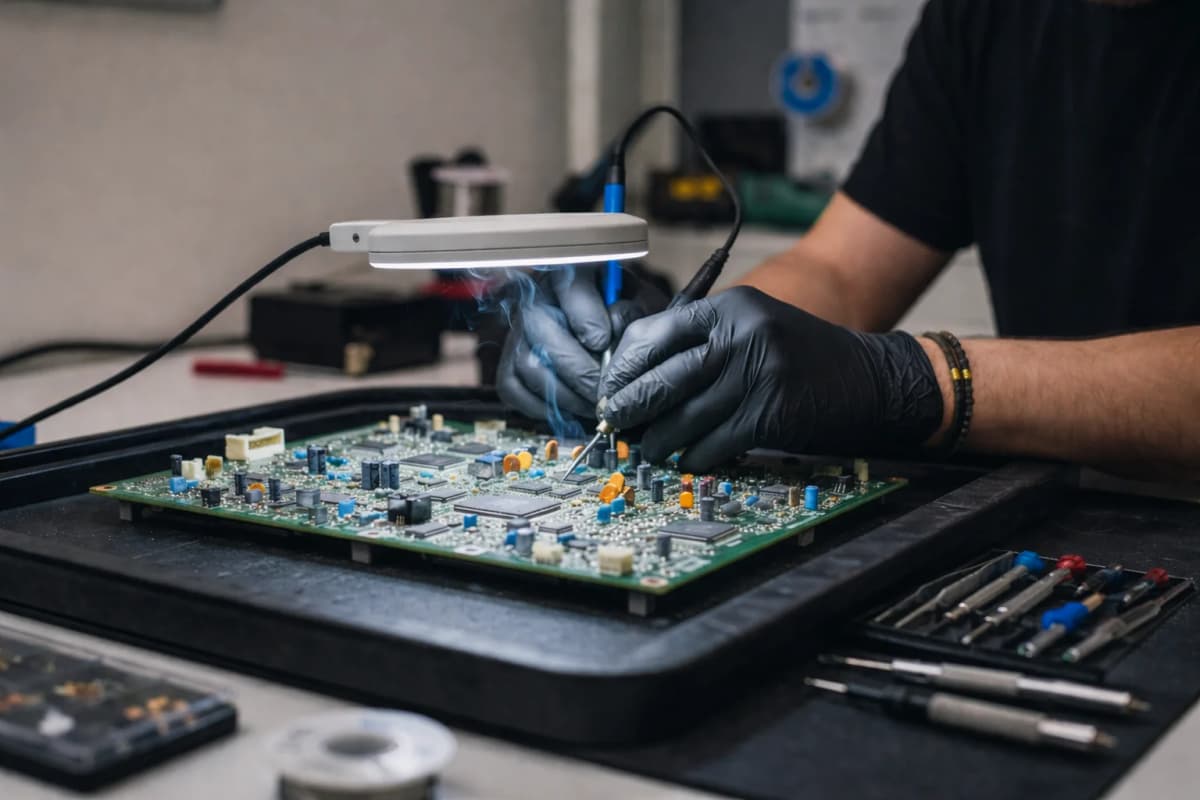
ZF AL TCM: diagnostics and solutions for transmission ECUs
ZF AL transmission ECU faulty? Targeted diagnostics, cloning or tested replacement to restore reliable gear shifting. Request your personalized quote.
After a diagnostic scan, your transmission reports faults related to the ZF AL transmission ECU (example references: AL551, AL552, AL450, AL951). This type of TCM, integrated into the mechatronics of many ZF automatic transmissions, manages the control of solenoids, the adaptation of multi-disc clutches, and CAN communication with the instrument cluster, engine, and ABS. When the internal electronics age, a degraded mode, jerking, locking in a single gear, or a lack of communication with the module is often observed. The DTCs that appear are typically alerts like "internal module", "internal speed sensor", or "solenoid command line fault", without necessarily pointing to a specific external sensor. Here's how to recognize a ZF AL ECU failure, differentiate it from a sensor or harness issue, and which actions to prioritize (bench diagnostics, cloning, repair, or paired replacement).
Find your exact reference
Search by hardware reference, software reference or control unit name. Click a result to configure and order without leaving the page.
Symptoms that bring you here
The ZF AL ECU controls oil pressure and clutches within the mechatronic unit. When it is faulty, the transmission frequently goes into safety mode with gear lock (often perceived as 3rd or 4th), loss of kickdown, and illumination of the transmission or engine warning light. On the road, you may experience irregular gear shifts, jerking during downshifts, delayed engagement in D or R, or a "transmission fault" message on the dashboard. When stationary, some vehicles refuse to start if the ZF AL ECU does not authorize the P/N position (start inhibition), or the selector displays flashing PRND and the diagnostic tool can no longer communicate with the TCM.
When reading the DTCs, error families related to a faulty ZF AL generally include internal module faults, inconsistencies in integrated sensors (shaft speeds or internal pressure), solenoid command issues, and sometimes a lack of CAN communication with the rest of the network. Conversely, an external sensor or clogged hydraulic component often generates more localized and reproducible errors. If you work on vehicles equipped with ZF automatic transmissions — for example, on certain BMW 5 Series E60, Audi A6 C6, Jaguar XF X250, or Land Rover Discovery 3 — this symptomatic pattern clearly points to the ECU, especially when the degraded mode returns immediately after clearing and the power supplies are good.
Technical causes in this family
The ZF AL TCMs (family including references like AL551, AL552, AL450, or AL951) are mechatronic generation electronics: a board with a 32-bit microcontroller, solenoid drivers, and integrated sensors, communicating on a CAN bus with a diagnostic protocol like KWP2000 or UDS depending on variants. They typically feature flash memory for firmware and a serial EEPROM containing coding, VIN, and clutch adaptation data. Failures often stem from thermal aging, ATF oil attacks in the flat connector, worn 5V regulators, or weakened CAN transceivers. In setups found on certain European sedans and SUVs mentioned above, this technical context explains recurring "internal module" faults independent of peripheral sensors.
- Cracking of solder joints or vias on the mechatronic board due to hot/cold cycles.
- Deterioration of solenoid drivers causing command faults or harsh gear shifts.
- Drifting internal sensors (speed, pressure), leading to inconsistencies and immediate degraded mode.
- Unstable 5V/3.3V regulator or line creating random "internal module" faults.
- Damaged CAN transceiver causing a lack of communication with the ZF AL.
- Oil contamination in the mechatronic flat connector, leading to false contacts.
What Incarline offers
To confirm that it is indeed the ZF AL ECU and not a sensor or hydraulic block, a dedicated bench diagnostic allows verification of power supply, CAN communication, EEPROM reading, and command line coherence; Incarline offers this specialized diagnostic to objectify the fault before any intervention decision. If the module is repairable, the restoration targets electronic faults (power supply, drivers, communication) followed by functional control with reset of adaptations when required.
When the electronics are too damaged or the vehicle needs to be back on the road quickly, replacement with a tested, paired, and coded used ZF AL ECU is possible by transferring useful data (VIN, codings, adaptations) from the old unit to the replacement unit. Finally, if your ZF AL is still readable, cloning/virginization can be performed to retain the vehicle's identity and avoid a dealership visit, provided that the harness, hydraulic mechatronics, and power supplies have been checked and that the transmission adaptations are then relearned via an appropriate learning cycle.
Frequently asked questions
How do I know if my ZF AL ECU is faulty?
Which vehicles are equipped with the ZF AL ECU?
Can a ZF AL be cloned without going to the dealership?
What is the difference between a repair and a paired used unit for a ZF AL?
What to do in case of ZF AL failure after oil change or transmission service?
Can an external sensor mimic a ZF AL ECU failure?
Is learning required after replacing a ZF AL?
Your reference isn’t listed?
Contact us — we can source your control unit or handle your repair on a quote basis.
Contact us