
Used Siemens / Continental SIMOS paired for petrol engine
Siemens / Continental SIMOS ECU faulty? Choose a tested and paired used SIMOS with identical HW/SW. Reliable replacement. Request your personalized quote.
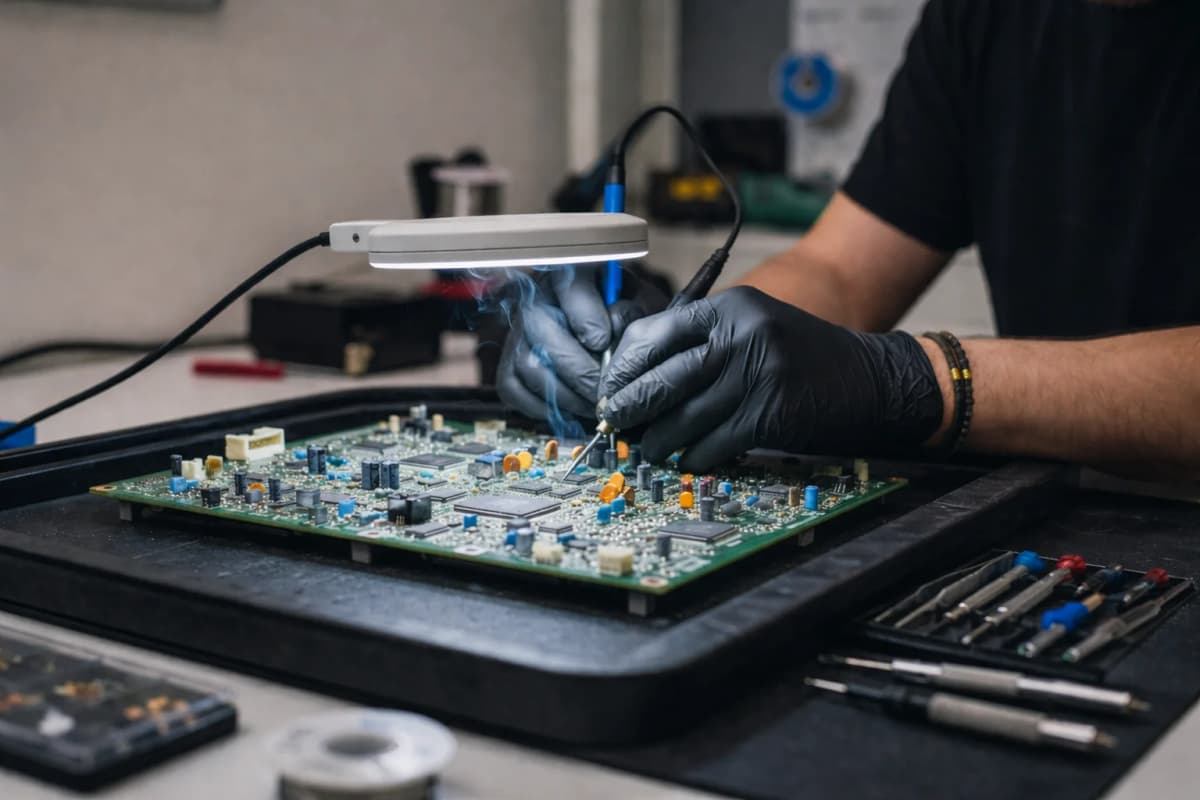
Please note: at Incarline, “repairing” a control unit means cloning. We transfer your original data — coding, immobiliser pairing and adaptations — onto a healthy unit with an identical reference. We do not carry out component-level repairs on your original unit.
The Siemens / Continental SIMOS engine ECU is used in many petrol injection engines, particularly within the Volkswagen group. When a SIMOS ages, typical symptoms include a persistent engine light, intermittent limp mode, misfires, or difficult starting despite a healthy mechanical condition. For these generations, the most rational approach is often replacement with a paired used SIMOS, rigorously of the same hardware and software reference. Incarline provides this type of unit tested and prepared for VIN/immobilizer pairing, ensuring that critical data (EEPROM, immobilizer parameters) match your vehicle. You then return your old unit as an exchange. This approach avoids random repairs on old boards and allows you to start again with a functional Siemens / Continental SIMOS ECU, compatible with identical HW/SW, ready for simple relearning if necessary.
Find your exact reference
Search by hardware reference, software reference or control unit name. Click a result to configure and order without leaving the page.
A typical case
A workshop receives a Volkswagen Golf 7 petrol with the engine light on and entering limp mode when hot. Ignition and fuel have been checked, main sensors replaced as a precaution, without lasting results. On the bench, the SIMOS shows sporadic cuts on injector control and unstable CAN communication after heating up. The chosen solution was not uncertain micro-repair, but replacement with a paired used Siemens / Continental SIMOS from a donor vehicle with the same engine, strictly the same HW/SW reference. The unit arrives already programmed with the vehicle's immobilizer data (or prepared for cloning/virginization as needed). After installation, a brief throttle relearning and idle adaptations suffice, UDS communication on CAN is stable, and the car returns to normal operation. The same scenario occurs on some Audi A3 8V and Skoda Octavia III petrol models, where a paired SIMOS definitively resolves an intermittent internal electrical fault in the ECU.
Why this ECU has this fragility
The Siemens / Continental SIMOS family combines a 32-bit microcontroller (typically from the tri-core range for recent iterations) with internal flash memory and an external serial EEPROM containing key identifiers (VIN, immobilizer data, specific parameters). Diagnostic communication is mostly via CAN with UDS protocol on modern versions, while older variants may use simpler layers. With age, the thermal dissipation of integrated power stages (coils, injectors, actuators) and heating cycles promote lead-free solder micro-cracks on certain connections or packages, causing intermittent faults impossible to reproduce when cold. The under-hood environment, humidity, and vibrations further exacerbate these phenomena, leading to command losses or network communication drops.
For these generations, component-level intervention on varnished multilayer boards remains delicate and sometimes non-durable, especially since some memory areas include OTP segments or checksums closely tied to software versions. A SIMOS can accept calibration variants, but the exact HW/SW index remains crucial for all functions (high-pressure pump management, wideband sensor control, ignition advance, onboard diagnostics) to remain coherent. That's why, when the fault is internal and intermittent, a rigorously identical, pre-tested used Siemens / Continental SIMOS often proves more reliable and economically viable than seeking a temporary repair on an aging board. This logic applies to many petrol compact and family cars in the group, like certain versions of the Seat Leon 5F, where HW/SW equivalence and immobilizer pairing determine success.
What changes when you send it to us
Upon receipt, Incarline verifies the complete reference of the Siemens / Continental SIMOS and compares it with the donor to ensure HW/SW identity. The faulty unit is read on the bench (EEPROM and, if relevant, flash areas) to clone immobilizer data and identifiers; if reading is impossible, the donor unit is prepared in compatible mode for relearning on the vehicle. The used SIMOS is then validated on a test harness with UDS CAN communication, sealed, and labeled. On the vehicle side, it generally remains to perform basic adaptations (throttle, idle, possibly fuel rail pressure sensor) and verify the VIN reported by the ECU. You return the old unit as an exchange, and the associated warranty applies to the provided ECU. This approach limits downtime and ensures reliability on aging SIMOS units without multiplying uncertain trials.
Frequently asked questions
How do I know if my Siemens / Continental SIMOS ECU is faulty?
Which vehicles are equipped with the Siemens / Continental SIMOS ECU?
Can a Siemens / Continental SIMOS be cloned without going to the dealer?
Is adaptation needed after replacing a paired Siemens / Continental SIMOS?
Does replacement with a paired used Siemens / Continental SIMOS require exact HW/SW matching?
What to do if my Siemens / Continental SIMOS has been water-damaged or burned?
Does the Siemens / Continental SIMOS use a UDS protocol on CAN for diagnostics?
Your reference isn’t listed?
Contact us — we can source your control unit or handle your repair on a quote basis.
Contact us