
Siemens / Continental MSD remapping for optimization
Optimize your Siemens / Continental MSD (engine ECU). OBD/bench/boot, stages, tailored maps and BMW DME precautions. Request your personalized quote.
The Siemens / Continental MSD ECUs (BMW petrol engine ECMs) are known for their precise management of direct injection and torque, with a close pairing to the vehicle's immobilizer system. They are well-suited for performance-oriented remapping (stage 1, stage 2) when access protocols (OBD, bench, boot-mode) and key tables (torque, timing, boost pressure, air-fuel ratio) are mastered. For this family, software stability and integrity control corrections are essential to avoid any bricking. Professionals typically use established solutions like Alientech KESSv3, KESS, MPPS, CMD, or PCMflash depending on the revision and available access mode. Incarline can perform the remapping in the workshop or provide a modified file remotely according to your needs and the ECU's condition.
Find your exact reference
Search by hardware reference, software reference or control unit name. Click a result to configure and order without leaving the page.
Technical sheet of this family
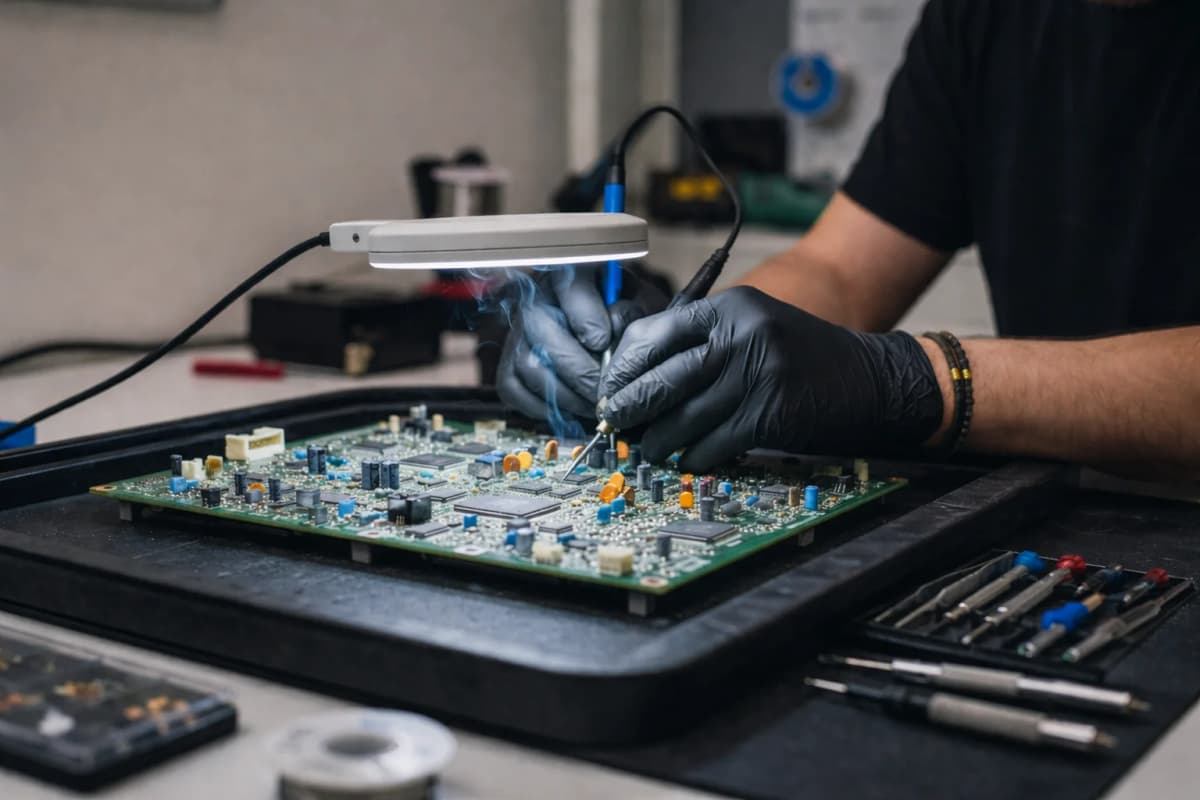
The Siemens / Continental MSD ECU is an intermediate generation BMW petrol engine control unit, designed around a 32-bit microcontroller with flash memory and a persistent data area (EEPROM or equivalent) for vehicle identification and pairing parameters. The ECU manages high-pressure injectors, ignition timing, torque limitation on multiple axes, as well as boost pressure when the engine is turbocharged. The system is paired with the BMW immobilizer (DME/CAS type), which requires maintaining the integrity of the identifier areas during a full write or cloning.
Access and protocols: depending on the revision of the Siemens / Continental MSD, map reading/writing can be done via OBD (partial calibration read/write), on the bench via the connector and a service mode, or in boot-mode with specific setup on the ECU. Some earlier variants offer low-level BDM access, useful for complete backups. Workshops usually use widely distributed professional tools (Alientech KESSv3/KESS, CMD, MPPS, PCMflash) whose support depends on the software version and available protocol. Robust operations include: full backup (flash + personal data), checksum verification and correction, and maintaining signature/conformity value consistency when required by the ECU.
Optimizable maps: typically, interventions are made on pedal/gearbox torque limits, torque → load converters, injection/AFR maps, ignition timing with knock management, turbo pressure targets and their limiters, as well as thermal and protection management tables (EGT/load). For turbocharged configurations, coordinated torque/boost/fuel calibration is essential to maintain component safety margins. In petrol, the removal of functions related to emission systems is mostly limited to catalyst or downstream sensor diagnostics when a modified exhaust is installed; DPF/AdBlue devices generally do not concern this family.
Limits and precautions: remapping a Siemens / Continental MSD must consider mechanical constraints (HP pump capacity, injectors, thermal exchange, original turbo). An interrupted write, poor checksum management, or inappropriate handling in boot-mode can render the ECU unresponsive. It is recommended to stabilize the power supply, perform full backups before any modification, and validate on road or bench with logs (pressure, AFR, timing corrections) to ensure long-term reliability.
Vehicles concerned
The Siemens / Continental MSD primarily equips BMW direct injection petrol engines from the late 2000s, notably on turbocharged versions highly appreciated for optimization.
- BMW 3 Series (E90/E92) 335i – N54 engine – ≈ late 2000s
- BMW 1 Series (E82/E88) 135i – N54 engine – ≈ late 2000s
- BMW 5 Series (E60/E61) 535i – N54 engine – ≈ late 2000s
- BMW X6 (E71) xDrive35i – N54 engine – ≈ late 2000s
- BMW Z4 (E89) sDrive35i – N54 engine – ≈ late 2000s / early 2010s
Points of vigilance
Before any remapping of a Siemens / Continental MSD, check the condition of the wiring and power supply, back up the calibration memory and identifier area, then choose the appropriate protocol (OBD if supported for safe map writing, bench/boot-mode for full access). Be cautious of critical startup areas; alteration can immobilize the vehicle and require intervention on DME/CAS pairing. Checksum corrections and conformity value consistency (when applicable) must be managed by the tool or validated manually. In petrol, adding parts (downpipe, intercooler, intake) requires coordinated calibration to avoid lean or rich conditions and overheating; disabling diesel-specific functions (EGR/AdBlue) is not relevant for most MSDs.
Incarline performs these operations with a backup and validation protocol, in the workshop or via a modified file service remotely when OBD/bench reading is provided by the client.
Frequently asked questions
How do I know if my Siemens / Continental MSD accepts OBD remapping or if bench/boot-mode is required?
Which maps are generally modified on a Siemens / Continental MSD for a stage 1 or 2?
Can a Siemens / Continental MSD be cloned to avoid a dealership visit?
What professional tools are used to program a Siemens / Continental MSD?
Is there a risk of bricking when writing a Siemens / Continental MSD?
Is DPF/EGR/AdBlue removal relevant on Siemens / Continental MSD?
What should be checked after remapping a Siemens / Continental MSD?
Your reference isn’t listed?
Contact us — we can source your control unit or handle your repair on a quote basis.
Contact us