
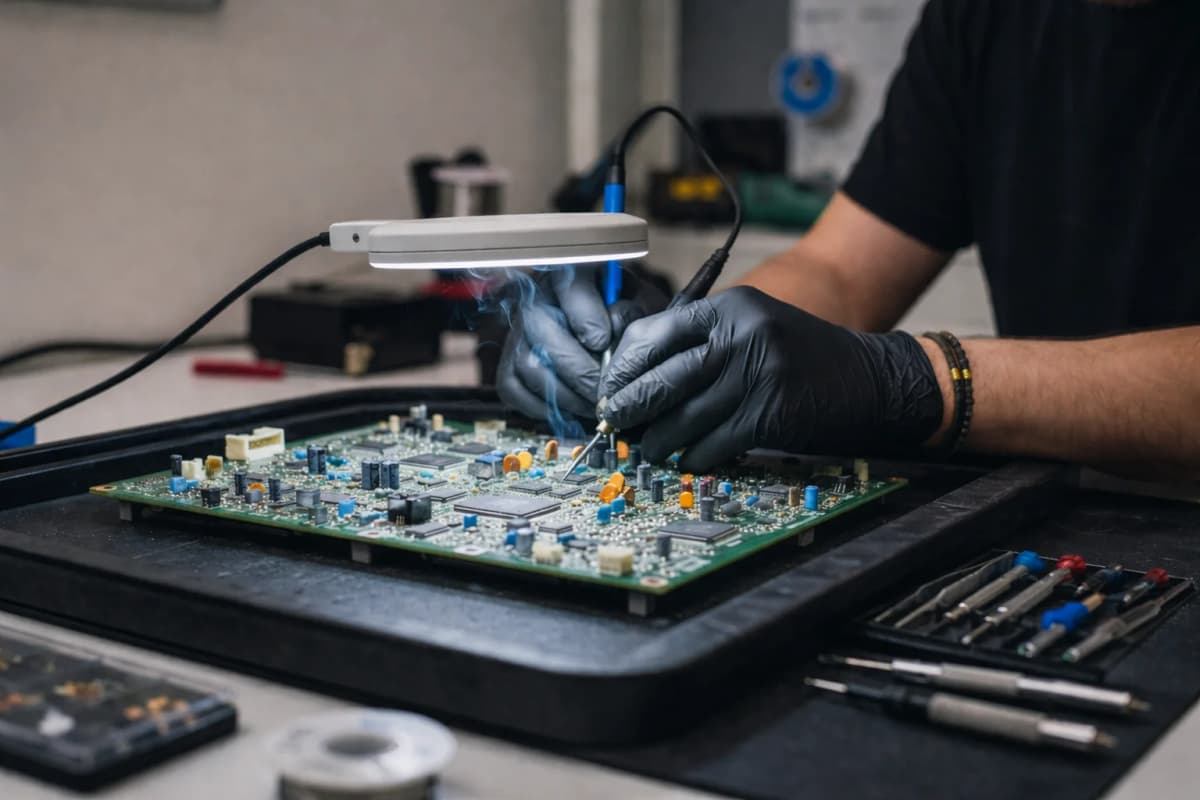
Remapping Siemens / Continental DQ (TCM) for DSG
Optimize your Siemens / Continental DQ TCM: clutch maps and gear shifts via OBD/bench/boot-mode. Request your personalized quote.
The Siemens / Continental DQ transmission ECU controls the mechatronics of dual-clutch transmissions for the VAG group. In remapping, the goal is to adjust clutch and gear shift strategies, optimize torque limiters on the transmission side, and harmonize the calculated torque exchange with the engine ECU. Depending on the version, access is via OBD or direct connection (bench/boot-mode) to safely read/write the calibration. Typical settings involve clutch pressure and engagement ramp, kick-down logic, shift points, and thermal protections related to transmission oil. This approach integrates with a stage 1/2 engine, ensuring TCU/ECU coherence. Incarline can perform Siemens / Continental DQ remapping in the workshop or provide a modified file based on your readout, with parameters tailored to the intended use.
Find your exact reference
Search by hardware reference, software reference or control unit name. Click a result to configure and order without leaving the page.
Technical sheet of this family
The Siemens / Continental DQ is a transmission ECU (TCM) dedicated to dual-clutch gearboxes ("DQ" family) integrated into a mechatronic unit. It orchestrates the two clutches, hydraulic actuators, and gear shift strategy, relying on shaft speed, position, and oil temperature sensors. The typical architecture revolves around a 32-bit microcontroller commonly used in TCMs of this period, a flash memory containing firmware and calibrations, and a serial EEPROM that retains codings and adaptations. Communication with the engine ECU is via the CAN network to share torque demand and apply limiters on the transmission side.
Access and protocols: depending on the revision, reading/writing the calibration area of a Siemens / Continental DQ can be done via OBD (manufacturer diagnostics/UDS) with a protocol dedicated to the TCM, or in "bench" mode by connecting to the board's test points. On variants with a recent microcontroller, the boot-mode of the 32-bit core is often the preferred method for low-level access; activation is via service pins and allows robust writing outside the vehicle. Legacy methods like BDM are generally not required for this generation but remain a special case for some older derivatives.
Tools and workflow: depending on the protocol available on your Siemens / Continental DQ reference, recognized professional interfaces on the market can be used, such as Alientech KESSv3 or CMD in OBD/bench, or PCMflash for compatible VAG TCM modules; some platforms from the KESS/MPPS family are also employed when the targeted OBD protocol is supported by the variant. The standard procedure includes: TCM identification, full backup of readable data (reading the calibration area and, if possible, the EEPROM), map modification, checksum recalculation, then writing and verification. In case of doubt about OBD support, bench/boot-mode access remains the safest way to avoid any risk of interruption on the vehicle bus.
Adjustable maps (TCM): on a Siemens / Continental DQ, work is done on transmission-specific tables: accepted torque limiters on the transmission side (and their arbitration with engine demand), clutch pressures and ramps (fill/vent), allowed slip thresholds, hysteresis and shift curves depending on modes (D/S/manual), kick-down logic, thermal protection based on oil temperature, and, on some iterations, launch management and gear transition handling at partial/full load. Injection, timing, or boost pressure maps are part of the engine ECU; TCM remapping aims more at coherence and exploitability of the actual torque delivered by the engine after stage 1/2.
Limits and compatibilities: not all Siemens / Continental DQ references have the same access levels or mechanical tolerances. Some versions only allow calibration area writing and prohibit firmware overwrite; others require strict power sequences during boot-mode. Calibration must always respect the thermal capacity of the oil and clutch margins, otherwise wear and overheating increase rapidly. The goal of successful optimization is to enhance driving comfort (shift speed, reduction of unnecessary slip) while maintaining critical TCM safeties.
Vehicles concerned
The Siemens / Continental DQ family equips many DSG transmissions of the VAG group. The exact presence depends on the engine and gearbox variant (DQ200, DQ250, DQ500, etc.). The examples below are indicative and may vary depending on versions and generations.
- Volkswagen Tiguan 2.0L TDI/TSI with DSG 4Motion transmission (depending on generation)
- Audi Q3 2.0L TDI/TSI quattro with DSG gearbox (depending on version)
- Volkswagen Transporter/Multivan T5/T6 2.0L TDI equipped with DSG (depending on variant)
- Audi RS3 2.5L TFSI S tronic, some generations equipped with a high-capacity DQ
- Škoda Octavia 2.0L TDI/TSI with DSG, compatible versions depending on series
- SEAT Leon 2.0L TDI/TSI with DSG, variants depending on chassis and transmission
Points of caution
Writing and risks: a poorly powered Siemens / Continental DQ during flashing can "brick" (incomplete writing). It is imperative to use a stabilized power supply in bench/boot-mode, respect the connection order, and verify checksums before writing. Programming counters and calibration identifiers (CVN) may evolve: ensure the chosen strategy remains compatible with subsequent diagnostics. After any modification, perform clutch adaptation procedures and monitor oil temperature during tests.
TCU/ECU coherence: optimizing a Siemens / Continental DQ must remain coherent with the engine mapping. Too permissive transmission limiters against an uncontrolled engine torque lead to slip and overheating; conversely, too restrictive thresholds degrade comfort and trigger premature shifts. Tests are validated with a chronotachometer and via CAN logs (shaft speed, requested/received torque, oil temperature). Incarline can provide a Siemens / Continental DQ calibration aligned with your engine stage, ensuring essential transmission safeties are maintained.
Specific functions: DPF/EGR/AdBlue removal concerns the engine ECU and is not performed in the TCM; however, the transmission must accept the new torque profile and associated regimes. The "felt" gains mainly come from better clutch locking, faster shifts in suitable modes, and reduced dead times. Finally, some DQ variants impose strict access windows (OBD only with the engine idling, or boot-mode with pins to maintain at reset). Anticipate these constraints to choose the protocol: OBD if support is confirmed; bench/boot-mode otherwise.
Frequently asked questions
How do I know if my Siemens / Continental DQ ECU is compatible with OBD remapping?
Which maps can be modified on a Siemens / Continental DQ?
Can a Siemens / Continental DQ be cloned without going to the dealership?
What is the difference between gearbox and engine remapping on a Siemens / Continental DQ?
What are the risks of bricking when writing a Siemens / Continental DQ?
Does the Siemens / Continental DQ allow launch control via remapping?
Which protocol should be preferred to modify a Siemens / Continental DQ: OBD, bench, or boot-mode?
Does DPF/EGR/AdBlue removal impact the Siemens / Continental DQ?
Your reference isn’t listed?
Contact us — we can source your control unit or handle your repair on a quote basis.
Contact us