
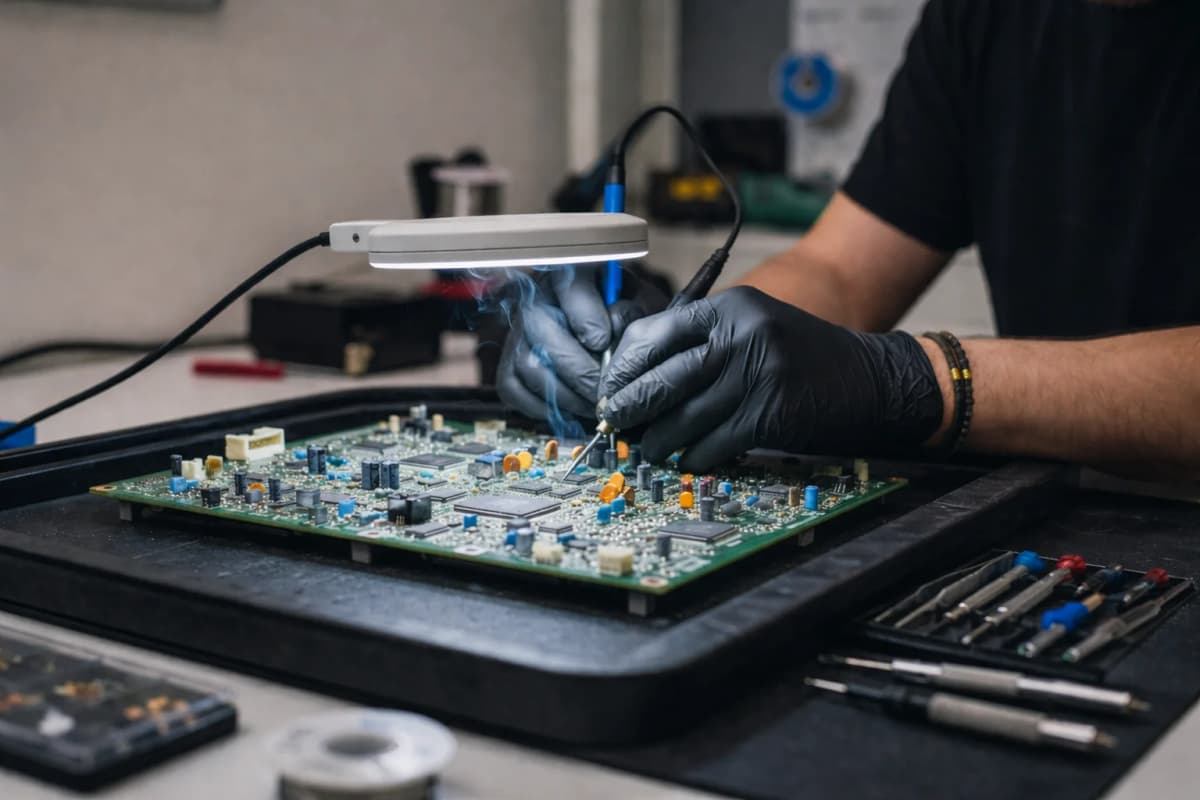
Lucas XUDLC Remapping — ECU Engine Optimization
Lucas XUDLC Remapping (Engine ECM): torque/driveability optimization, EGR adjustments if applicable. OBD/bench/boot access. Request your personalized quote.
The Lucas XUDLC ECU is an ECM dedicated to diesel engines with pump management, often found in older generation European vehicles. Based on this, coherent optimization focuses on injection maps (quantity, timing), torque limiters, and, depending on the application, boost and EGR management. Software access is generally via OBD protocols when available, otherwise in bench/boot directly on the electronics. Common professional tools (read/write interfaces and editing software) allow extraction of the calibration, adjustment of targeted tables, and writing of a validated file with integrity corrections. Incarline can perform Lucas XUDLC remapping in the workshop or provide a modified file remotely, with technical framing considering the hardware limits of this architecture and the inherent risks of any write operation.
Find your exact reference
Search by hardware reference, software reference or control unit name. Click a result to configure and order without leaving the page.
Technical Specifications of This Family
Lucas XUDLC belongs to the category of engine ECUs (ECM) for diesel with pump management. This generation generally relies on a 16-bit microcontroller and a mixed memory architecture (internal/external parallel flash and 8-pin serial EEPROM dedicated to identification and immobilization parameters). Diagnostic port access may exist for reading, while writing is often safer via bench or boot-mode on test points; some variants allow a hardware debugging mode specific to microcontrollers of this era. The exact years vary depending on applications, but this type of ECU is typically found from the 1990s on diesel engines with electronic pumps.
In the context of Lucas XUDLC remapping, usual targets are injection quantity tables, injection timing, torque limiters based on RPM/pressure, smoke correctors, and, if applicable, boost pressure command if a solenoid valve control is managed. EGR management is frequently present and can be adjusted. More recent devices like DPF/AdBlue are generally not concerned with these applications; a case-by-case verification remains essential.
Tools and Protocols: depending on protocol availability on Lucas XUDLC, industry interfaces (KESS, MPPS, CMD, Alientech KESSv3, PCMflash) can be used in OBD for simple reading, or in bench/boot-mode when writing via the diagnostic port is not supported. In practice, the bench/boot approach is preferred to secure complete extraction, access the calibration partition, and properly manage checksums. Map editing is done in hexadecimal software or via definition drivers when they exist for this family; otherwise, the analyst relies on usual axes (RPM, pressure, temperature) and table structures characteristic of these Lucas ECMs.
Specific Limits and Precautions: the gain margins on Lucas XUDLC are dictated by the capacity of the injection pump and the intake/exhaust system of the time; aggressive torque increase at low RPM can degrade driveability (smoke, diesel knock) or unnecessarily stress the clutch. Before any writing, it is imperative to back up the entire flash/EEPROM content, stabilize the power supply (laboratory power supply), and check sector integrity. A communication interruption during writing can render the Lucas XUDLC inoperative (bricking), requiring non-OBD access for recovery. Finally, the immobilizer and possible VIN identifier generally reside in EEPROM: any operation must preserve these blocks or plan for pairing.
Vehicles Concerned
The Lucas XUDLC is associated with diesel engines with electronic pump management of the XUD family or similar. The exact presence varies by market and trims; identification should always be based on the ECU label and connector. Indicative examples where this type of ECM/Lucas management is found (depending on versions):
- Peugeot 406 2.1 TD (XUD11 engine, some versions with electronic pump)
- Citroën Xantia 2.1 TD (XUD11, versions equipped with Lucas management)
- Citroën XM 2.1 TD (XUD11, presence depending on configuration and market)
- Peugeot 605 2.1 TD (XUD11, variants with electronically controlled pump)
- Peugeot 806 2.1 TD / Citroën Evasion 2.1 TD (XUD11, depending on trims)
Important: these indications are provided for informational purposes. Some similar vehicles received other management systems depending on years/equipment. Always check the reference on the unit before any intervention on a Lucas XUDLC.
Points of Attention
Lucas XUDLC Remapping: prioritize a complete read before any modification, check and recalculate checksums, use a stabilized power supply, and, when possible, perform writing in bench/boot rather than via OBD. Avoid abrupt increases in torque limiters and respect the mechanical constraints of the pump and turbo of this generation. In case of EGR adjustment needs, intervene coherently with the ECU's diagnostic strategy to avoid warning lights or limp modes. If VIN/immobilizer pairing is present in the EEPROM, anticipate cloning this area to retain starting. Incarline offers, at your choice, a technically framed Lucas XUDLC remapping in the workshop or the provision of a calibrated file remotely after reading your unit.
Frequently asked questions
Which tools are compatible for reading/writing a Lucas XUDLC in remapping?
Which maps can be optimized on a Lucas XUDLC?
Does the Lucas XUDLC accept EGR/DPF/AdBlue removal?
Can a Lucas XUDLC be reprogrammed only via the OBD port?
How to avoid bricking a Lucas XUDLC during remapping?
Is cloning a Lucas XUDLC useful for retaining the immobilizer?
What realistic gains can be expected from a Lucas XUDLC after optimization?
Your reference isn’t listed?
Contact us — we can source your control unit or handle your repair on a quote basis.
Contact us