
Kefico M Remapping for Petrol Engine | ECU Optimization
Kefico M Remapping (ECM): OBD/bench reading, injection/advance/torque maps, stage 1/2 and specific options. Request your personalized quote.
The Kefico M engine ECU is common on multipoint injection petrol engines of the same generation. For measured optimization (stage 1/2) or specific functions (deactivation of components for reserved use), remapping involves reading the ECU memory, modifying the relevant maps, and then rewriting while respecting integrity constraints. Depending on the version, access is via OBD, bench, or boot-mode. The adjusted areas generally include injection, ignition advance, torque limits, and, on turbocharged variants, pressure management. INCARLINE can perform the remapping in the workshop or provide a modified file remotely, with precautions to avoid any 'bricking'.
Find your exact reference
Search by hardware reference, software reference or control unit name. Click a result to configure and order without leaving the page.
Technical Data of This Family
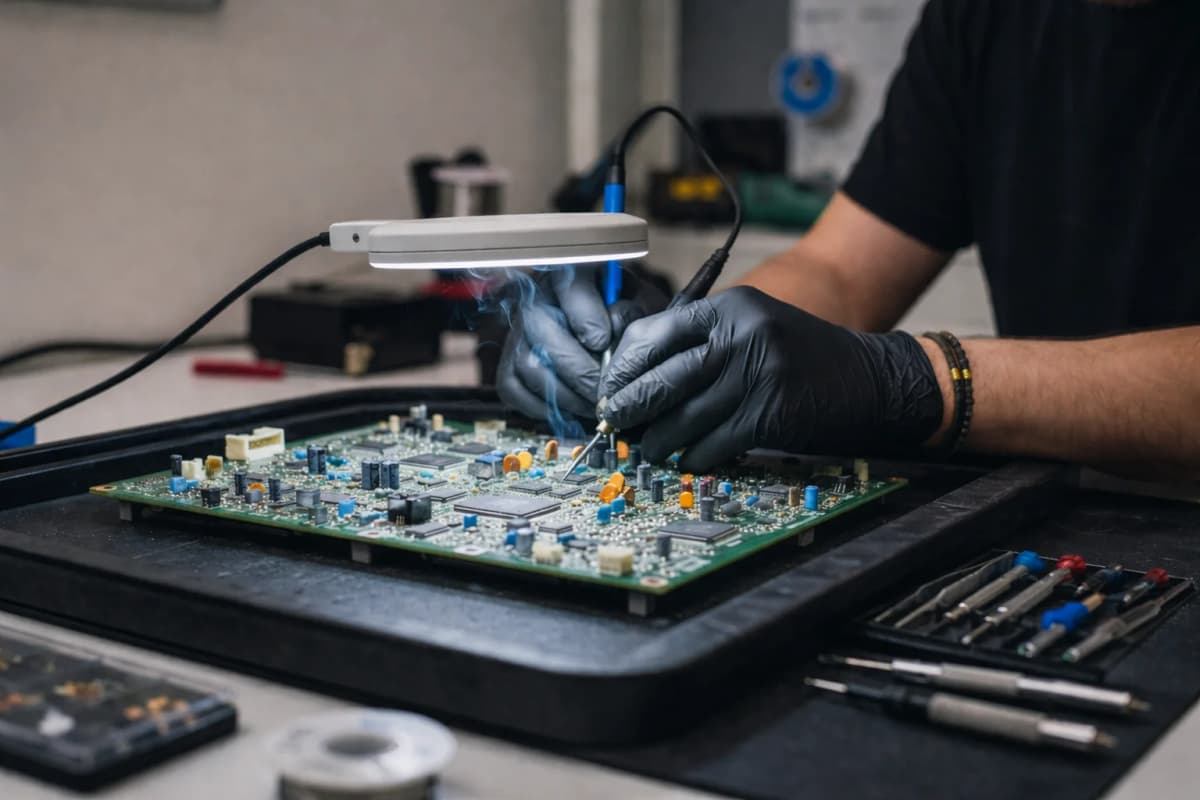
The Kefico M family includes petrol ECMs using a 32-bit microcontroller and internal flash memory supplemented by a data area (EEPROM or emulation) containing identifiers, adaptations, and immobilizer. Vehicle communication varies according to year and revision (K-Line or CAN), which determines the availability of an OBD protocol for reading/writing. When OBD is not supported or locked, intervention is done on the bench (stabilized power supply, ECU pin connection) or in boot-mode directly on the electronic board, to access the flash and configuration area. On some older revisions, a debugging-type access may be required, otherwise, memory desoldering remains the last resort.
In the context of a Kefico M remapping, workshops commonly use professional interfaces capable of managing these accesses (for example, KESS, MPPS, CMD, Alientech KESSv3, or PCMflash, depending on the available protocol and ECU hardware version). The standard procedure includes: identification, full backup (reading of calibration and, if possible, internal memory), controlled modification of tables, recalculation of checksums, and compliance with any conformity signatures (CVN) specific to this generation. INCARLINE offers a service in the workshop or the provision of a modified file based on your readings, with connection and power supply instructions to secure the writing.
- Commonly modifiable maps: injection timing and targeted AFR, ignition advance, torque limiters and calculators, throttle/idle management, transient enrichments, thermal limits, and, on turbocharged versions, boost pressure control and associated safeties.
- Specific functions possible depending on configuration: deactivation of diagnostics (additional sensors, EVAP, EGR on versions equipped), lambda mode adapted to circuit use, cold start management.
- Typical constraints: torque/load monitoring, compatibility with automatic gearbox/ESP, nested tables (axes and correctors by temperature/altitude) requiring a coherent approach to avoid inconsistencies.
Technical limits: gains on naturally aspirated engines remain linked to ignition and richness optimization, limiter smoothing, and response improvement. On turbocharged variants, optimization must be accompanied by temperature monitoring and octane margin. Some areas may be partially protected (OTP/RO) and require low-level access mode. The quality of the original file (complete reading, without corruption) is crucial for safe and reversible writing.
Vehicles Concerned
The Kefico M ECU is mainly found on petrol vehicles from related Asian manufacturers, on common displacements (approximately 1.1 to 2.0 L), with naturally aspirated or, more rarely, turbocharged variants depending on markets. The exact presence depends on years and regional variants; the list below is indicative and may vary by country and engine.
- Hyundai i10 – 1.1/1.2 petrol engines – early generations (depending on markets)
- Hyundai i20 / brand's compact sedans – 1.2/1.4/1.6 petrol – initial generations
- Hyundai Accent/Verna – 1.4/1.6 petrol – regional variations
- Kia Rio – 1.2/1.4 petrol – earlier generations (depending on equipment)
- Kia cee’d / brand's compacts – 1.4/1.6 petrol – first series
In case of doubt, refer to the ECU label (Kefico M) and the identification read by the tool to confirm belonging to this family before any operation.
Points of Caution
A Kefico M remapping involves precautions: back up all accessible areas (calibration and, if possible, micro/EEPROM), use a stabilized power supply and a reliable bench harness, and avoid any interruption during writing (risk of 'bricking'). In case of boot-mode access, follow the initialization procedure (boot pins, ground, timing) and document the exact position on the PCB before intervening. After modification, check the checksums and verify the absence of parasitic faults related to torque/load consistency. On naturally aspirated engines, remain conservative on advance if local fuel is heterogeneous; on turbocharged versions, monitor exhaust temperatures and original pressure limits. Throttle/idle adaptation and monitoring of hot lambda corrections are recommended after writing.
The deactivation of components (EGR, filters, etc.) is only conceivable within a regulated framework and, if applicable, for non-road use; some diagnostics may be intertwined (OBD readiness, monitors) and require a fine approach to avoid a permanent light. Finally, if the vehicle is equipped with an automatic transmission, take into account shared torque strategies to preserve comfort and longevity. For controlled support, INCARLINE can perform the intervention in the workshop or prepare a modified file remotely based on your complete readings.
Frequently asked questions
How do I know if my Kefico M ECU is compatible with OBD remapping?
Which tools can safely read and write a Kefico M?
Which maps are modified during a stage 1 on Kefico M?
Can EGR or diagnostics be deleted on a Kefico M without a permanent engine light?
What happens if writing fails and my Kefico M is 'bricked'?
Is cloning a Kefico M necessary after remapping?
Are the expected gains after a Kefico M remapping identical on all engines?
Do checksums need to be recalculated and CVN managed after modifying a Kefico M?
Your reference isn’t listed?
Contact us — we can source your control unit or handle your repair on a quote basis.
Contact us