
Bosch MSA: find and verify the exact reference of your ECU
Bosch MSA: identify the correct ECU reference, read HW/SW markings and find the compatible part using the configurator. Request your personalized quote.
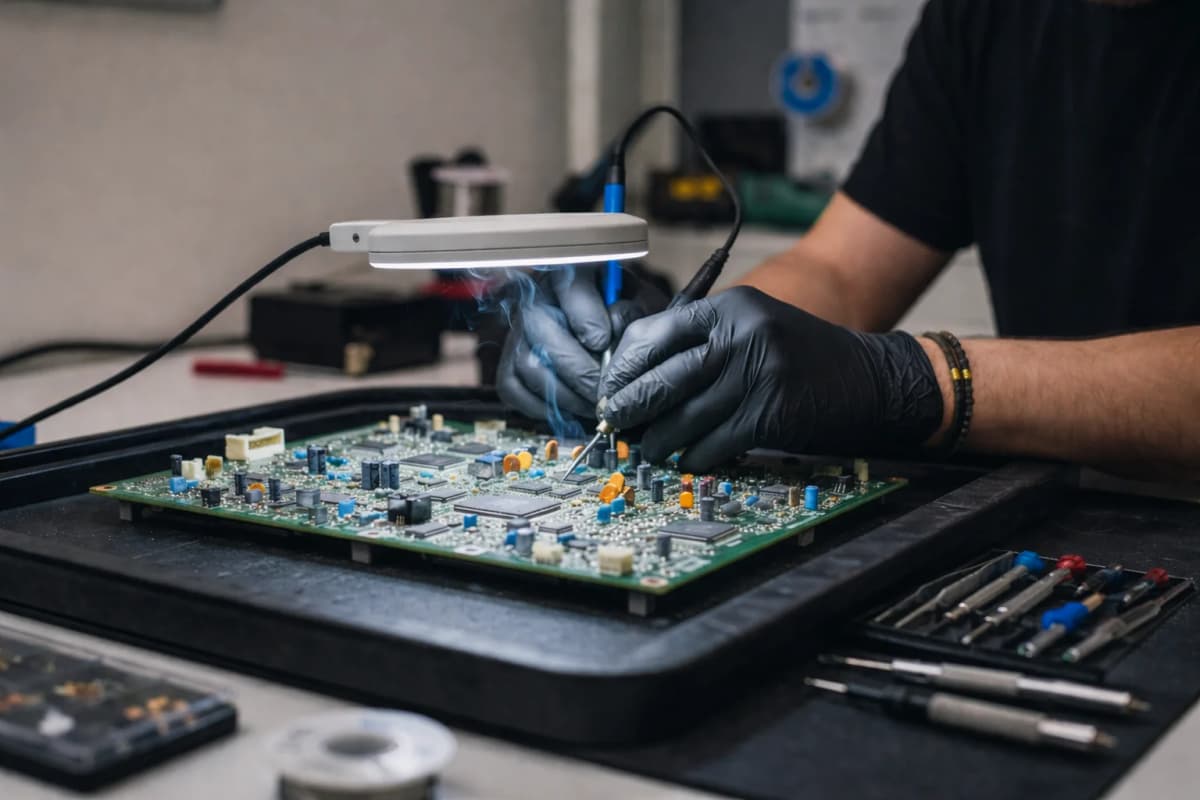
Is your engine showing ECU symptoms or are you looking for a replacement Bosch MSA ECU? Before ordering, you need to note the exact reference on your unit. On the top label, you can usually distinguish: the manufacturer reference (a number specific to the vehicle brand), the Bosch number (in the typical 0 281 xxx xxx diesel format), a software code type 1037… (SW index), and sometimes a serial number. Internal markings on the printed circuit board (HW indices, silkscreens, memory label) may differ from external markings: they confirm the hardware/software version but do not replace the front reference. Enter the OEM reference, Bosch number, or HW/SW pairs into the configurator on this page to target the exact part. Remember: on a Bosch MSA, only the identical reference (and its associated indices) is suitable; a nearby variant is not interchangeable.
Find your exact reference
Search by hardware reference, software reference or control unit name. Click a result to configure and order without leaving the page.
Technical sheet of this family
The Bosch MSA is a diesel engine ECU from a generation prior to the more recent EDC platforms. It is used in engines with electronic rotary pumps (such as the VP37 type on many applications) and manages injection, timing, and ancillary devices via a typical 16-bit microcontroller of that era. The memory generally includes a parallel flash/EPROM for engine software and a serial EEPROM (24Cxx family) for adaptive parameters and, depending on the vehicles, immobilizer data. Diagnostic communication is performed via the K-line (ISO 9141 / ISO 14230), without CAN bus on most versions. This family is mainly found from the mid-1990s to the early 2000s.
On the labels of a Bosch MSA, you will find several identifiers simultaneously: the Bosch number (format 0 281 xxx xxx), the manufacturer reference (alphanumeric format specific to the car brand), a hardware index (HW), and a software index (SW — often recognizable by a code starting with 1037…). Internal markings (circuit silkscreens, memory component labels) confirm the hardware variant but should not be used alone to order a part. To avoid errors, enter all visible markings into the configurator and also compare the connector type and the housing mounting layout. The Bosch MSA is sensitive to index differences: a close but different reference can prevent starting or generate a limp mode.
Vehicles concerned
The Bosch MSA is mainly found on older generation rotary pump diesels, notably within Volkswagen group models and on some 5-cylinder applications originally from Audi fitted by other brands. The list below illustrates commonly associated cases, to be verified by reading the label on your own unit.
- Audi A4 (B5 generation) 1.9 TDI with rotary pump
- Volkswagen Passat (B5 generation) 1.9 TDI with rotary pump
- Volkswagen Golf III 1.9 TDI with rotary pump
- Audi A6 (C4 generation) 2.5 TDI with rotary pump
- Volvo V70 I 2.5 TDI (5-cylinder block of VAG origin)
- Seat Ibiza (6K generation) 1.9 TDI with rotary pump
Warning: this family includes multiple variants. Even within the same model/engine, only the identical Bosch MSA reference and its HW/SW indices ensure compatibility. Use the configurator by reference (Bosch/OEM) or by vehicle, then filter with your exact markings.
Points of caution
A non-strictly identical Bosch MSA (reference, hardware index, and software version) can prevent starting, block the immobilizer, or force limp mode operation. Before intervening, carefully note: Bosch number (0 281 xxx xxx), manufacturer reference, HW/SW indices, and compare connectors and housing layout. If the external label is partially unreadable, an internal marking check (and, if necessary, a bench software identification) often confirms the variant. To save time, enter all these elements into the configurator on this page: search by Bosch reference, OEM reference, or HW/SW pair.
In case of a failing ECU, certain operations are technically possible on Bosch MSA (diagnosis, data cloning, refurbishment/virginization depending on the case, or replacement by a tested paired used unit) — Incarline can guide you on the suitable solution after analyzing your markings and symptoms. Symptoms of a faulty MSA remain generic: random starting, stalling, power loss, engine light, limp mode, or internal management faults. Legal reminder: disabling pollution control systems is not offered.
Frequently asked questions
How do I know if my Bosch MSA ECU is faulty?
Where to read the correct reference on a Bosch MSA?
Which vehicles are equipped with the Bosch MSA ECU?
Can a Bosch MSA be cloned without going to the dealership?
What is the difference between repair and paired used replacement for a Bosch MSA?
Are Bosch MSA ECUs interchangeable between close variants?
How to use the configurator to find a compatible Bosch MSA?
What to do if my Bosch MSA label is damaged or unreadable?
Your reference isn’t listed?
Contact us — we can source your control unit or handle your repair on a quote basis.
Contact us