
Aisin AQ TCM Remapping: Reliable Transmission Optimization
Aisin AQ Remapping: optimized shift patterns, pressure, and torque limits, OBD/bench access depending on versions. Request your personalized quote.
The Aisin AQ automatic transmission ECU is a TCM managing shift patterns, hydraulic pressures, and torque converter lock-up. When the engine is already optimized (stage 1/2, DPF/EGR/AdBlue removal on the engine ECU side), an adapted calibration of the Aisin AQ TCM allows exploiting the available torque while protecting the clutch and hydraulics. Data access is done depending on versions via OBD or on bench (bench/boot-mode). A complete backup (flash + possible adaptation data) and a stabilized power supply are essential to avoid any risk of bricking. Incarline can perform the remapping of your Aisin AQ in the workshop or provide a calibrated file remotely based on your original readout.
Find your exact reference
Search by hardware reference, software reference or control unit name. Click a result to configure and order without leaving the page.
Technical Specifications of This Family
The Aisin AQ TCM controls the gearbox via real-time calculation of line pressures, clutch fill ramps, and shift commands. It communicates via CAN with the engine ECU to receive torque requests, command a possible torque reduction during gear shifts, and report ATF temperature. The electronics commonly rely on a 32-bit microcontroller with internal flash memory for software and maps, complemented by non-volatile memory dedicated to adaptations. Typically, a set of sensors (input/output speed, oil temperature) and proportional solenoids are integrated into a mechatronic block exposed to heat and ATF.
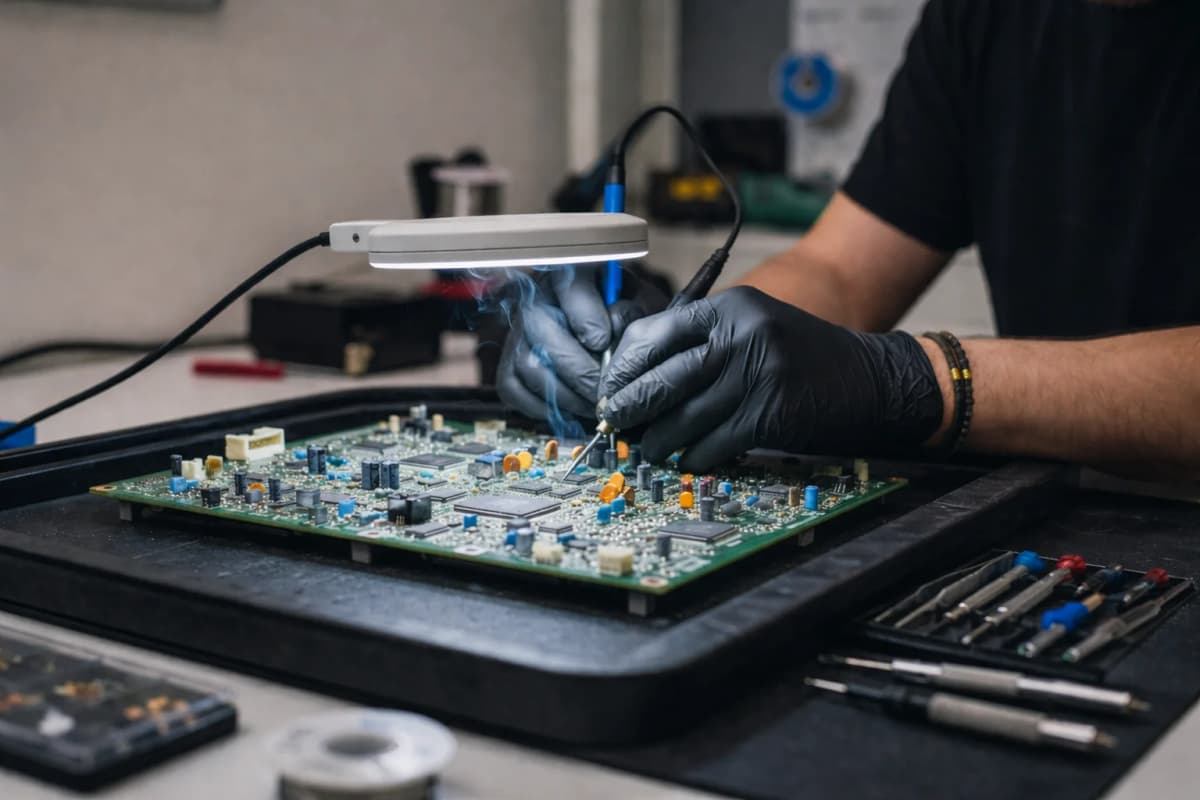
Regarding access, several scenarios exist depending on hardware and software revision: read/write via the OBD port on some vehicles, or bench work via the ECU connector. For generations that allow it, a boot-mode is used to access the flash content at a low level; using a BDM-type access is not the most common way for this family. In practice, a full backup is always performed before any modification, followed by a calibrated write with checksum control and identifier verification. Professional multi-brand programming interfaces and specialized TCM software suites are used; exact compatibility depends on the vehicle and the embedded software version.
The maps typically modified on Aisin AQ relate to the transmission: shift pattern tables (based on load/RPM/temperature), accepted torque limiters, line pressures per gear, converter management (lock-up thresholds and progressivity), kickdown sensitivity, thermal protection. Unlike an engine ECU, intervention is not made on injection, timing, or boost pressure in the TCM; these parameters belong to the engine ECU. The goal is to accept increased engine torque without excessive slip, reduce hesitations, and adjust behavior (more responsive under load, smoother in urban driving) while respecting mechanical tolerances.
Limits and precautions: the admissible torque remains bounded by the mechanics (converter, planetary gear sets, clutches). Insufficient line pressure or overly aggressive patterns increase wear; conversely, well-managed pressures improve endurance. A remapping of the Aisin AQ TCM must therefore be consistent with the engine preparation: if a stage 1/2 has increased the torque, the TCM calibration must adjust the limiters and fill times to avoid slipping. Stabilized power supply, multiple backups, and post-write adaptation procedures (reset/learn) are essential. Incarline can provide a custom-calibrated Aisin AQ file from your original readout or perform the intervention directly in the workshop.
Vehicles Concerned
The Aisin AQ TCM equips various Aisin 6-speed automatic gearboxes mounted on vehicles with transverse engines. The list below is indicative and depends on versions and markets; the presence of the Aisin AQ and its exact pairing vary according to model year and engine.
- Volkswagen Golf (gen. V/VI) 4-cylinder petrol/diesel, depending on years and markets
- Volkswagen Passat (B6/B7) 4-cylinder, versions with Aisin automatic gearbox
- Skoda Octavia (gen. II) 1.6–2.0 engines, certain automatic trims
- SEAT Leon (1P) TSI/TDI 4-cylinder with Aisin 6-speed gearbox
- Audi A3 (8P) transverse automatic versions depending on engines
- Certain VAG group estates/MPVs equipped with an Aisin 6-speed
Points of Attention
Main risk: ECU bricking in case of interrupted write or non-compliant checksum. To avoid it: stable power supply, precise identification of software version, full read (flash and, if available, adaptation area) then tested write. During an engine optimization (DPF/EGR/AdBlue removal done on the engine ECU side), remember that the Aisin AQ TCM does not manage these systems; instead, shift patterns, accepted torque limits, and converter management should be adapted to harmonize the whole.
After writing, some versions require a reset of adaptations and a learning procedure on the road (controlled ATF temperature, D–R sequences, progressive shifts). Inconsistencies between declared torque on the CAN network and actual produced torque can trigger a limp mode; therefore, torque acceptance tables must be adjusted and, if necessary, synchronization of torque cut parameters during gear shifts with the engine ECU. Finally, avoid overly stiff calibrations when cold: ATF viscosity impacts fill times and can cause jerks if margins are insufficient.
In case of mechatronic block replacement, pairing (VIN/variants) and sometimes cloning of original data may be necessary to restore initial behavior. In the context of optimization, always keep the original file for rollback. If you wish to delegate the operation, Incarline performs the Aisin AQ remapping in the workshop or can prepare a modified Aisin AQ file from your readout, with adaptation and road control recommendations.
Frequently asked questions
How is an Aisin AQ remapping carried out in practice?
What gains can be expected from optimizing the Aisin AQ TCM with a stage 1/2 engine?
Does the Aisin AQ allow DPF/EGR/AdBlue removal via TCM remapping?
Is the Aisin AQ TCM accessed via OBD or is a boot-mode required?
What are the risks during a write on Aisin AQ and how to mitigate them?
Can an Aisin AQ TCM be cloned in case of mechatronic replacement?
How to know if my Aisin AQ limits torque after an engine preparation?
Your reference isn’t listed?
Contact us — we can source your control unit or handle your repair on a quote basis.
Contact us