
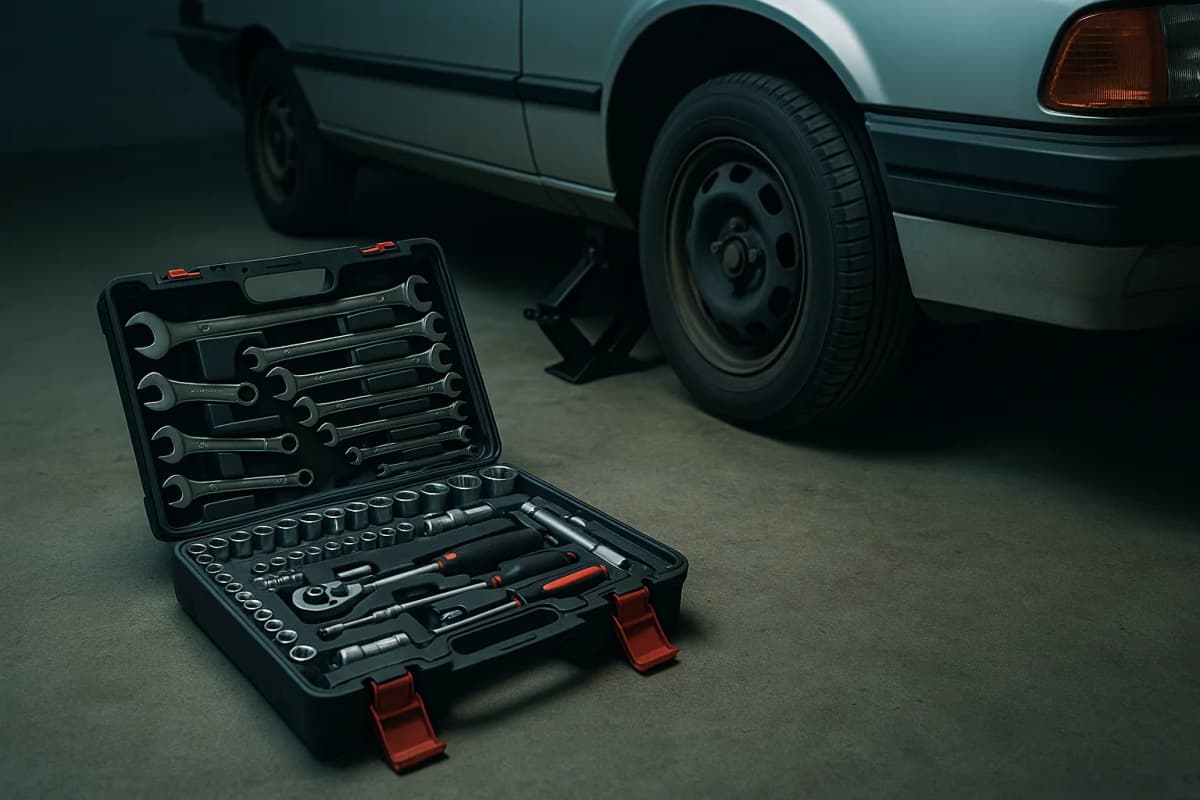
It's not always obvious, but there are also less traditional places to get your car repaired and make significant savings!
Get Your Car Serviced
Unlike the technical inspection, servicing a car is not a legal requirement, but it is an intervention recommended by the car manufacturer. It allows checking the proper functioning of the vehicle's components and the replacement of defective parts if necessary.
Traditional Repair Locations
Before going on vacation or a long trip, the driver can visit different service providers to get their car serviced:
Repairing your car cheaply, it's not always obvious, but there are also less traditional places to get your car repaired and make significant savings!
- The dealership. To carry out a repair or service, many go directly to an establishment that is part of the manufacturer's network of their vehicle. However, the services of these "experts" are only advantageous when the vehicle is under the manufacturer's warranty. After this period, dealership rates are generally among the highest;
- The auto center. These establishments perform light repairs (oil change, tires, air conditioning, brakes...) and thus offer affordable rates. However, the staff is often less qualified than in a dealership and offers lower-quality parts;
- The independent garage. Whether multi-brand or affiliated with a manufacturer without being a dealership, the mechanic can handle all types of repairs. Depending on the professionals, the rates are very variable.
Other Solutions for Cheap Car Repairs
It's not always obvious, but there are also less traditional places to get your car repaired and make significant savings!
- In a high school or mechanic school. No need to worry: students and apprentices are supervised by professionals;
- In an associative garage or solidarity garage. You can get help from volunteers and borrow equipment in exchange for an affordable annual membership and a low hourly rate;
- In a self-garage. You will have to get your hands dirty, but you won't pay for labor, resulting in real savings. In most self-garages, professionals are available to help you if needed.
Servicing Your Car Yourself
For even more savings, the most handy can literally get their hands dirty and service their car themselves. After obtaining the technical manual for the specific car model, simply check point by point the braking system, oil levels, the condition of the shock absorbers, tire pressure...
However, be careful, a "home" service can only be performed if the car has not traveled more than 5,000 km since the last technical inspection, and not everyone can improvise as a mechanic.
Take Advantage of Used Spare Parts
Since 2009, experts can estimate the cost of repairs for a damaged car based on the price of used parts. An economical and ecological solution that needs to be governed by certain rules. This provision does not apply to safety parts, but only to so-called "captive" parts (body parts, lighting, bumpers...).
Another advantage, using used parts can prevent a car from being classified as "economically irreparable" (VEI), meaning the repair cost exceeds the car's value. This classification results in the cancellation of any repair coverage by the insurance company and triggers a buyback of the vehicle by the insurer: it is therefore preferable to avoid it.
Highly Variable Service Rates
Just like any retailer, garage rates vary from one establishment to another. Two main criteria have a direct influence on the displayed prices:
- The car brand: for equal services, the cost of labor and spare parts fluctuates from simple to double depending on the model and brand of the vehicle. Thus, repairing an Audi sedan will logically cost more than a small Renault city car;
- The geographical location: from one region to another, there are significant disparities in the hourly labor rate. The most economical areas are in sparsely populated rural sectors, while there is a price surge in large cities (Paris, Lyon, Marseille...) where demand is higher.
Garages are required to clearly display their VAT-inclusive rates inside and outside the premises, according to the decree of March 27, 1987.