
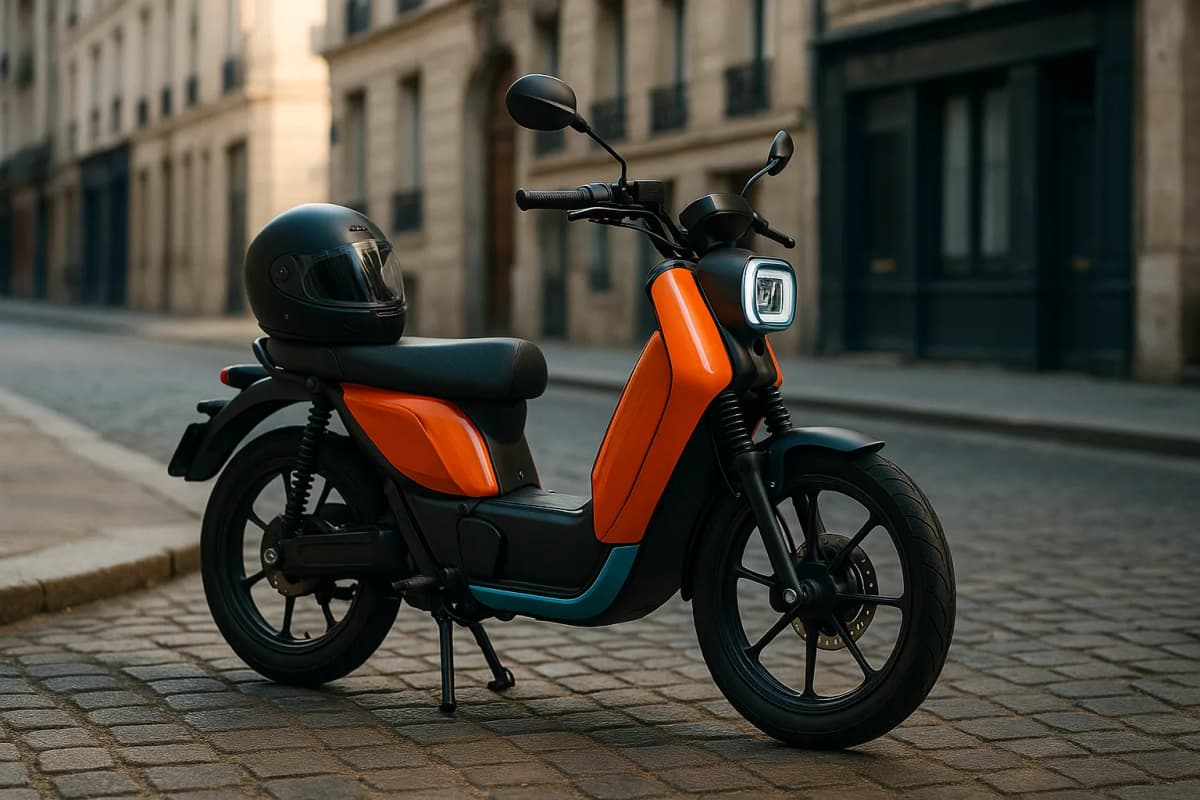
Light mopeds are a sub-category of mopeds. They specifically belong to the sub-category L1e-B
What is a light moped?
They join, in the Highway Code, other motorized personal transport devices (EDPM), such as electric scooters, gyropods, monowheels, and hoverboards. Light mopeds, also known as electric balance bikes, are small two-wheelers equipped with a seat, resembling a mini-bike. They can be used from the age of 12.
Light mopeds are a sub-category of mopeds. They specifically belong to the sub-category L1e-B, reserved for vehicles equipped with an electric motor whose:
maximum speed does not exceed 25 km/h
maximum power does not exceed 350 W
unladen weight is limited to 30 kg
Vehicles authorized in the city: light mopeds
A decree published in the Official Journal dated January 15, 2022, includes light mopeds in the Highway Code. From now on, it is possible to travel in the city with this type of device. However, certain conditions must be met.
Light mopeds and other EDPM: authorized circulation areas
The place of EDPM in public space is strictly regulated.
In urban areas, you must travel with your device on bike lanes and paths if there are any. Otherwise, you can travel on roads where the maximum authorized speed is 50 km/h or less. However, the circulation of EDPM is prohibited on sidewalks. You can still park there, provided you do not obstruct pedestrian traffic or compromise their safety.
Outside urban areas, you can only travel on bike paths and greenways (towpaths, forest roads...).
EDPM: what are the mandatory equipment?
EDPM must be equipped with:
a braking system
a sound warning device
front and rear position lights
front and rear reflectors (retro-reflective devices)
Drivers, on the other hand, are required to wear, at night or when visibility is reduced (in fog, for example), a reflective garment, including in urban areas. At other times, wearing it is simply advised. Finally, wearing a helmet is not mandatory but strongly recommended.
The diagnostic device can detect the slightest anomaly in the vehicle, even if no warning light has come on. The technician then only has to carry out the necessary interventions to solve the problem. Once the repair is completed or the maintenance performed, the maintenance indicators are then reset. The auto diagnostic tool can also be used for other actions:
resetting valve sensors, setting the tire pressure target;
reprogramming the onboard computers or ECUs after part maintenance;
changing electric parking brakes, replacing brake fluid.
The IncarLine advantage:
All IncarLine centers are equipped with "diagnostic tools" or electronic diagnostic devices, and all our technicians are trained in their use. Efficient and responsive, they can work on any type of vehicle and carry out the appropriate repairs. Our experts are at your disposal to ensure the maintenance of your vehicle.
IncarLine professionals can also offer you the best products on the market, from the most reputable brands. As well as an onboard auto diagnostic system, to understand a technical problem encountered on the road, or a multi-brand diagnostic tool to analyze a malfunction on any type of vehicle.