
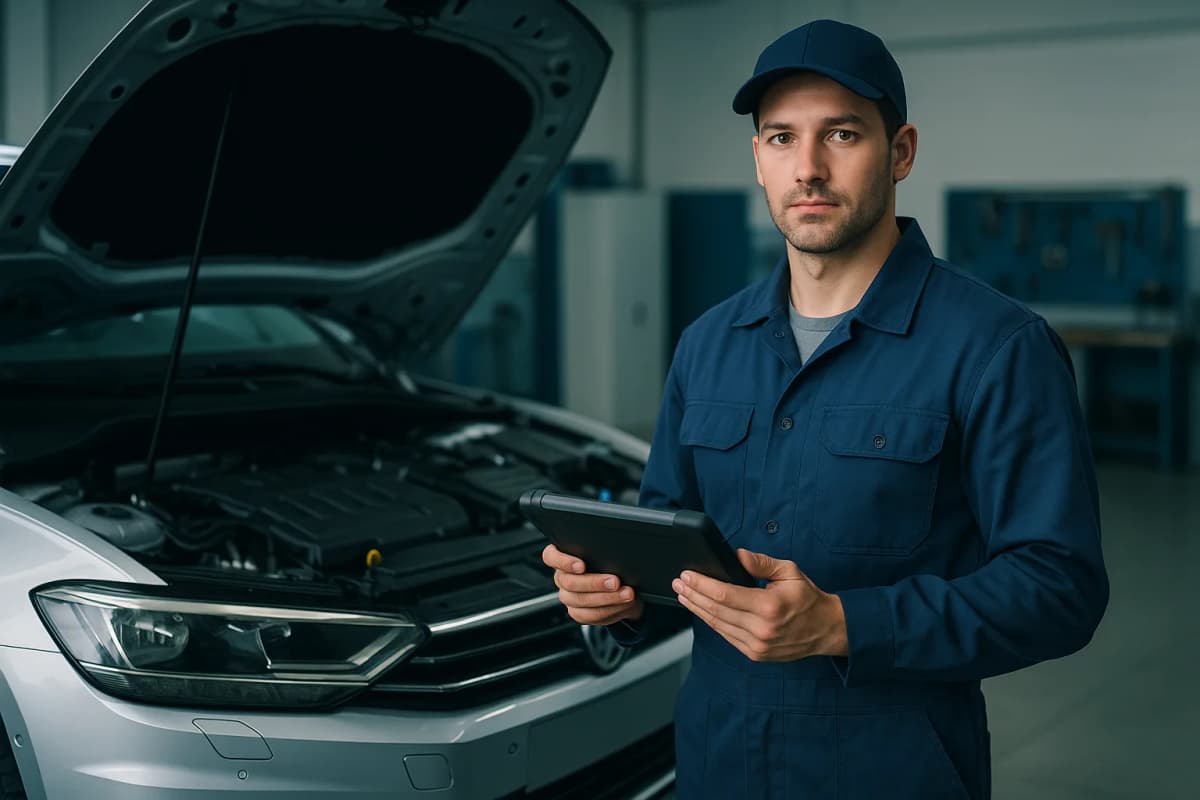
The cost of a car diagnostic mainly depends on the time spent on the diagnostic by the mechanic.
Is your car broken down and you don't know why? Do you suspect a problem with your vehicle? To identify it and proceed with the necessary car repairs, you can perform a car diagnostic. Here's everything you need to know about this essential operation.
What is a car diagnostic?
A car diagnostic allows you to identify a potential problem with your vehicle. You can request a diagnostic when you suspect a breakdown or malfunction.
Using a car diagnostic tool, the mechanic identifies the problem affecting your vehicle. They can then offer you solutions to repair it.
Why perform a car diagnostic?
A car diagnostic is carried out when you already suspect a problem with your vehicle. It is therefore different from a simple technical inspection, which is a preventive measure.
Consequently, performing a car diagnostic is often an essential operation. This process allows you to avoid any traffic accidents or simply to prevent a breakdown. It concerns your safety as well as that of other road users.
Here are some situations that should lead you to perform a car diagnostic:
- A warning light comes on your dashboard;
- Your vehicle produces a constant rumbling, clicking, or any other unusual sound;
- You notice a loud sound when braking;
- You have difficulty starting your vehicle and need to try several times.
All these problematic symptoms should prompt you to consult a specialist.
How does the automotive diagnostic tool work?
To perform the car diagnostic, your IncarLine mechanic connects their diagnostic tool to the dashboard and conducts an assessment. All vehicle systems are reviewed (engine, transmission, brakes, clutch). The multiplexing provides a complete list of control points to be checked, as well as the vehicle's malfunction history. In case of a problem to be solved (maintenance to be performed, breakdown to be repaired), the tool indicates the precise location, system, or subsystem concerned. This greatly speeds up the localization and resolution of breakdowns.
The diagnostic device can detect the slightest anomaly in the vehicle, even if no warning light has come on. The technician then only needs to carry out the necessary interventions to solve the problem. Once the repair is completed or the maintenance is performed, the maintenance indicators are reset. The diagnostic tool can also be used for other actions:
- resetting valve sensors, setting tire pressure specifications;
- reprogramming onboard computers or ECUs after part maintenance;
- changing electric parking brakes, replacing brake fluid.
The IncarLine advantage:
All IncarLine centers are equipped with "tools" or electronic diagnostic devices, and all our technicians are trained in their use. Efficient and responsive, they can work on any type of vehicle and perform the necessary repairs. Our experts are at your disposal to ensure the maintenance of your vehicle.
IncarLine professionals can also offer you the best products on the market, from the most reputable brands. As well as an onboard car diagnostic system, to understand a technical problem encountered on the road, or a multi-brand diagnostic tool to analyze a malfunction on any type of vehicle.
How much does a car diagnostic cost?
The cost of a car diagnostic mainly depends on the time spent on the diagnostic by the mechanic. This varies from simple to triple depending on the difficulty level of the fault finding.
On average, it takes 90 minutes for a car diagnostic performed in a garage. The cost of a car diagnostic ranges from €60 to €200.
Some garages offer economical diagnostic solutions targeting a single area of the vehicle: brake diagnostics, battery diagnostics, spark plug diagnostics, etc. These options, often cheaper, are very practical if you already know which part of the vehicle is affected by a malfunction, without being able to identify the exact origin of the breakdown.
Regarding the prices of the diagnostic tool, expect between €150 for a small basic model, to €1000 for a more elaborate model. Buying a tool is therefore a cost-effective solution in the long term, provided of course you know how to handle this tool and process the information it provides.
What are the different types of diagnostics?
There are two main types of car diagnostics: automatic diagnostics and manual diagnostics. Often, these two practices are combined in the form of a comprehensive package.
Automatic diagnostics
This is the famous diagnostic performed using the diagnostic tool. This device is used to detect and analyze issues with your vehicle. The mechanic connects it to the ECU and then retrieves all error codes. Often, a simple update of the vehicle's ECU is enough to resolve electronic issues.
Manual diagnostics
During manual diagnostics, the mechanic performs tests and conducts manual searches to identify the origin of the breakdown. This type of diagnostic is longer and requires particular expertise. It is most often performed as a second step when the automatic diagnostic has not provided conclusive results.
Comprehensive diagnostics
Many garages offer comprehensive diagnostic services. This operation consists of checking all the elements necessary for the normal functioning of your vehicle. It often combines automatic and manual diagnostic operations. In case of doubt, always refer to the general and specific conditions of the garage where you are having the diagnostic performed.
Here are the types of checks carried out during a comprehensive inspection:
Check of front/rear tires, particularly in terms of pressure and tire wear;
Check of front and rear shock absorbers;
Check of signaling lights;
Check of exterior mirrors;
Check of the condition of license plates;
Check of the windshield;
Check of the cabin filter and air filter;
Check of transmissions and boots;
Check of axial, steering, and suspension ball joints;
Check of front and rear wheel bearings;
Checks of front/rear brake discs and pads;
Fluid level top-up (coolant, power steering fluid, windshield washer fluid);
Check of brake fluid moisture and level;
Check of lighting and signaling bulbs;
Check of the condition of wiper blades;
Check of optics;
Check of the accessory belt;
Check of the brake master cylinder;
Check of cooling hoses;
Check of the exhaust;
Pollution check (petrol vehicles);
In-depth brake diagnostics front and rear.