
In 2022, 46.3% of breakdowns on petrol and diesel passenger cars were related to a battery problem.
In 2020, 46.3% of breakdowns on petrol and diesel passenger cars were related to a battery problem. This is according to a study conducted by the German automobile club ADAC and cited by l’Argus. This figure is up from 2019 (41.8%, according to figures reported by the site Automobile Propre). This is not surprising: during this period, many vehicles were immobilized for extended periods due to health restrictions. Added to this, the cold did not help.
Indeed, when the weather gets colder, batteries can easily lose up to 35% of their capacity. This can even go up to 50% when temperatures drop below 10°C. Problem: a cold engine can require up to 2.5 times more power than usual to start. However, if your battery is already tired, starting can be difficult, or even impossible.
The Starter Battery, Sensitive to Cold
The battery is a vital component, and not just on electric or hybrid vehicles. Put to the test in winter, it can quickly show signs of weakness, or even fail you. Here are the reflexes to adopt to preserve it.
How to avoid battery failure?
With the widespread adoption of remote working, we tend to drive less often than before. If you are among those who drive little or make multiple short trips, this does not allow the battery to store enough energy, it may be wise to invest in a so-called smart battery charger. Expect to pay around twenty euros for an entry-level model.
The operation of this charger is simple. You just need to plug it into a power outlet and then connect it to your battery terminals via crocodile clips. The device will then proceed to fully charge your battery. Once done, the charging process will stop. Then, when your battery's capacity falls below a certain threshold (for example, 90%), the charging process will automatically resume, and so on.
In this way, your starter battery will always maintain its full capacity. This system thus replaces the work of the alternator, an element that allows your battery to recharge when you drive.
If you do not have a garage or a parking space equipped with an electrical outlet, consider taking a long drive at least once a month so that your battery has time to recharge.
Check the Health of Your Battery
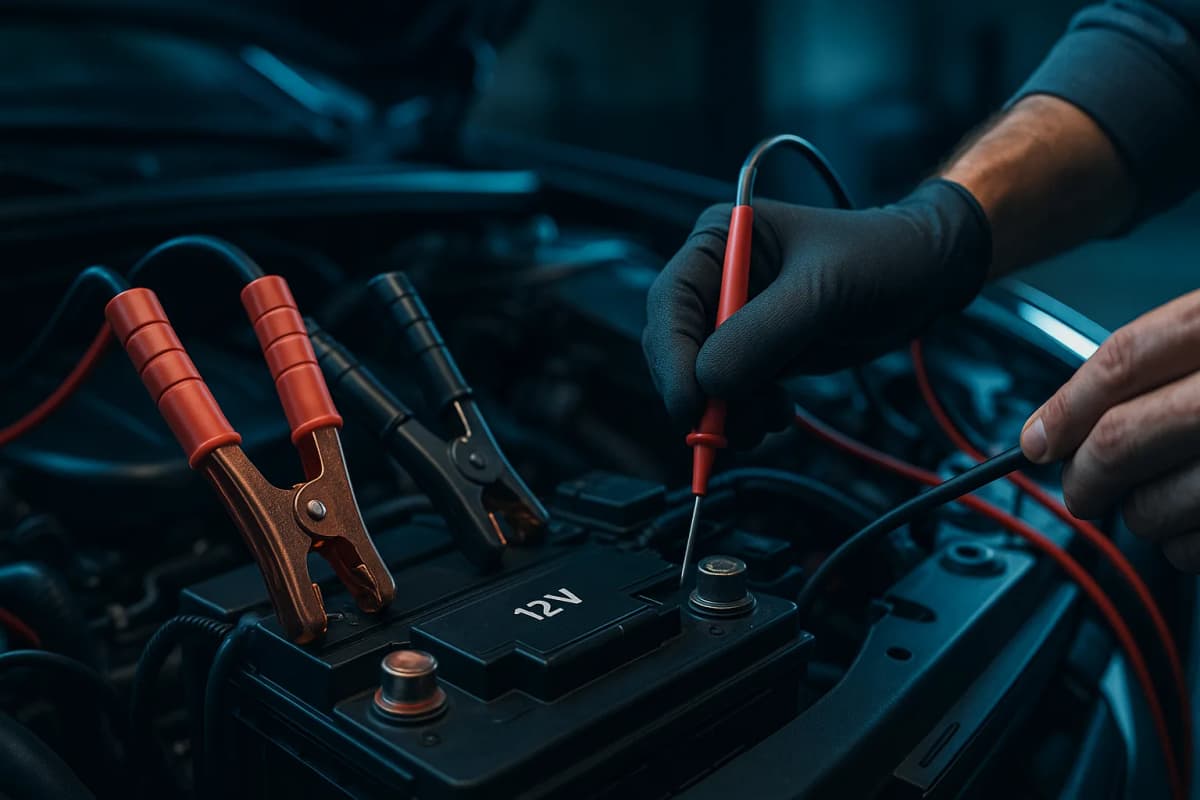
The lifespan of starter batteries is not what it used to be. Today, it is not uncommon to have to replace them after only 3 or 4 years. All the more reason to perform a small check from time to time. To do this, go to an auto center (many of them offer free winter checks). Unless you are equipped with a voltmeter! In that case, you can do the check yourself:
when the engine is off, the voltage at the terminals should be at least 12.6 V. Below 12.4 V, sulfate crystals can accumulate and damage your battery. So be careful if the problem persists
when the engine is running, the voltage should be between 13.2 and 15 V. If it is higher, it means there is an overcharging problem. If it is lower, then your battery needs to be recharged
The IncarLine Advantage:
All IncarLine centers are equipped with "suitcases" or electronic diagnostic devices, and all our technicians are trained in their use. Efficient and responsive, they can intervene on any type of vehicle and carry out the necessary repairs. Our experts are at your disposal to ensure the maintenance of your vehicle.
IncarLine professionals can also offer you the best products on the market, from the most reputable brands. As well as an onboard auto diagnostic system, to understand a technical problem encountered on the road, or a multi-brand diagnostic suitcase to analyze a malfunction on any type of vehicle.